From Monstrous Sculptures to Tobacco Bouquets, This Humid House Redraws the Bounds of Botanical Design

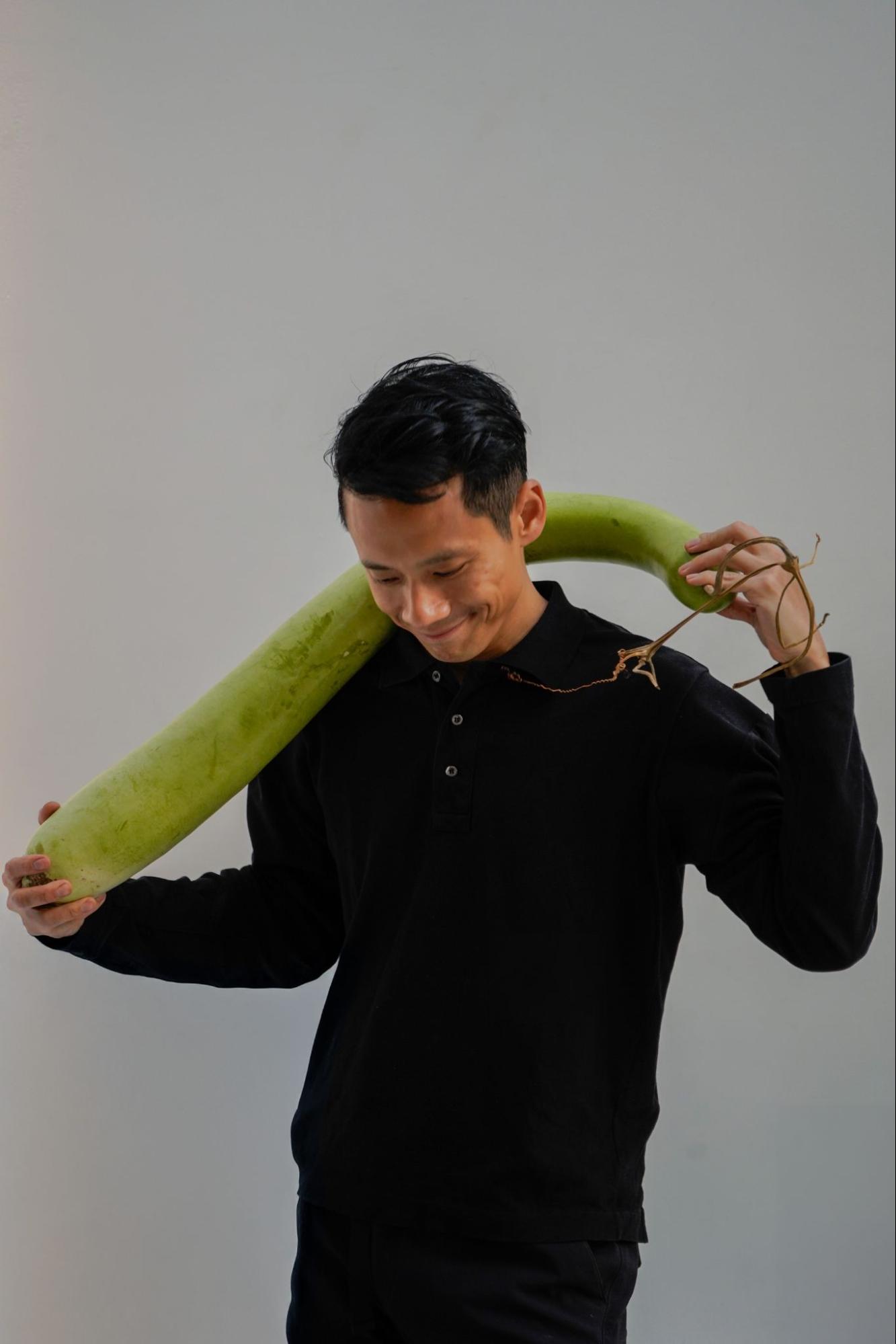
When John Lim first designed the flowers for his brother’s wedding in 2014, he had little idea where it would lead. Trained as an architect, Lim took up the task largely out of necessity: none of the florists he spoke to wanted to work with vegetables, an “edgy” choice he felt would represent the couple’s love of cooking. “They were like, that’s weird, we don’t do it. So I guess I had to.”
The final result, which incorporated not only veggies like onions and daikon but also local flowers (representing the tropics of both Singapore and the bride’s Florida hometown), kickstarted three years of freelance work before Lim officially founded his botanical design studio This Humid House (THH) in 2017. “One thing led to another,” he says modestly.
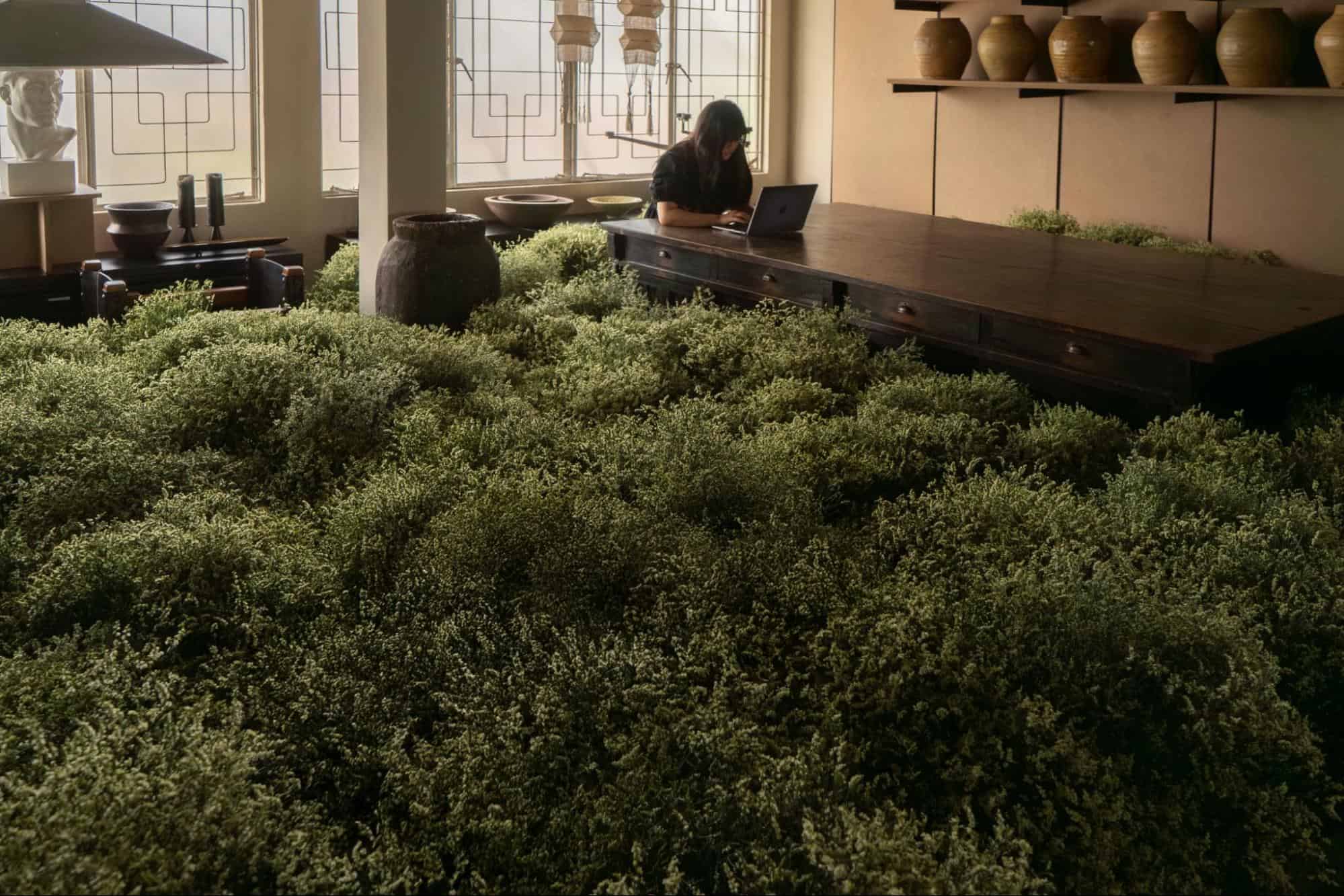
Today, the 14-man studio offers a boggling range of services, from rolling floral arrangements for offices, homes, and restaurants to floral design for weddings and events. The scale of projects slides from small, elegant “maquettes” — available singly or by subscription in their online store — to landscaping for residential and commercial properties. And their client list reads like a who’s who in luxury and fashion, including brands like Aésop, Cartier, and Louis Vuitton. (Remember the lush, vegetal visuals for the last few editions of ART SG? That was them, too.)
In late 2025, I pay a visit to the studio’s Jalan Senang headquarters, where I sit down with founder and creative director John Lim and general manager Sook Tan to talk about processes, inspirations, and their passion for “the unusual, the unruly, and the uncultivated.”
Making magic
Heading upstairs from the light-drenched, capacious first floor, filled with pots, tools, and live blooms wrapped in tissue paper, I meet Lim and Tan around the big table of their second-floor office. One wall is lined with small pots in all shapes and finishes — sourced from antique stores, flea markets, and the Thow Kwang Dragon Kiln, and destined for floral subscription contracts. Nearby looms a large multi-tiered vessel for stacking layers of flowers, called a tulipiere. This building is the epicentre of activity for the studio’s 14 team members and freelance collaborators.
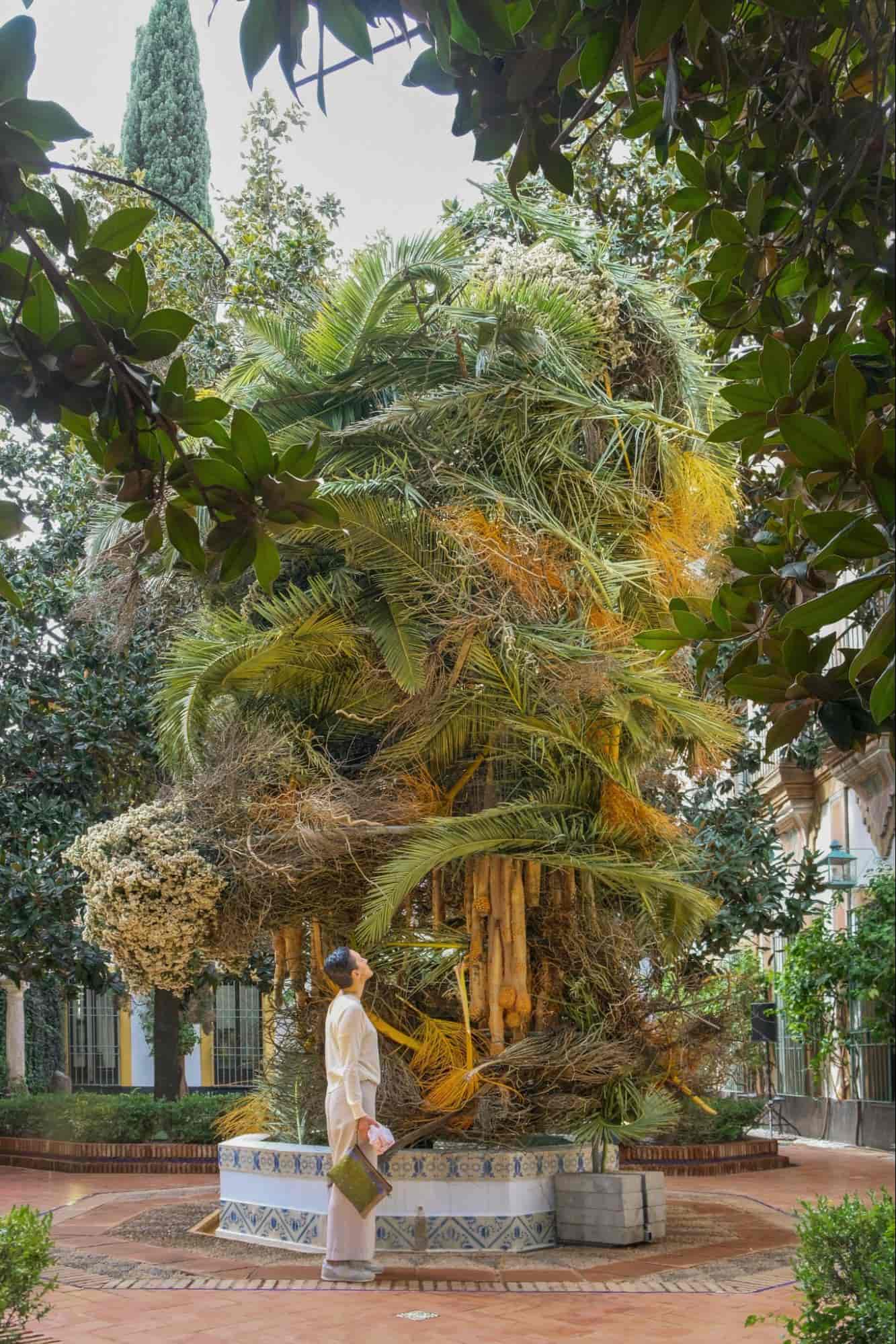
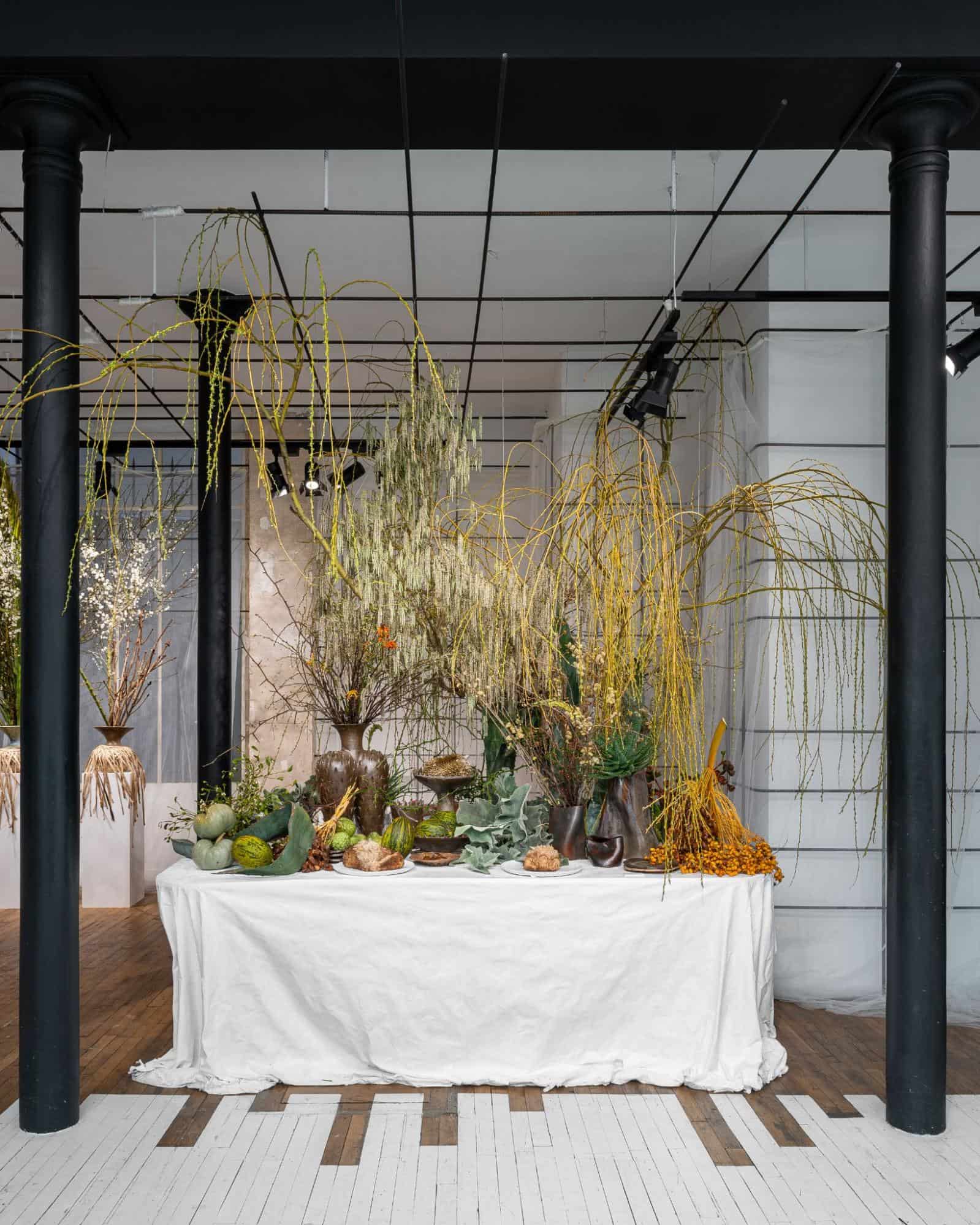
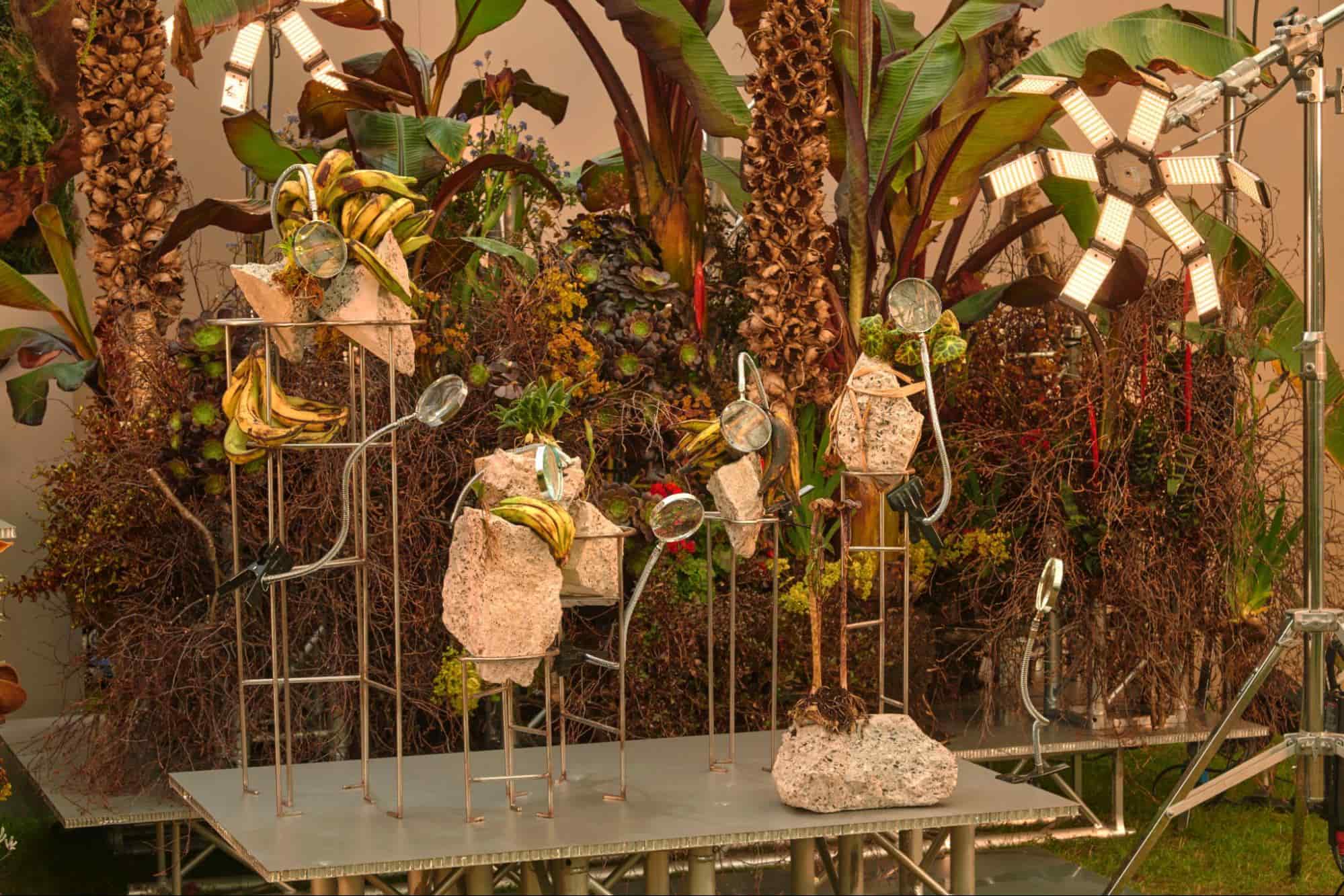
From ponderous, moss-wrapped stones for a VOGUE artist residency to a blue-ribbon tower of date palms for a Spanish flower festival, there is little twee, or even straightforwardly pretty, about THH’s work. Take, for instance, their installation Tabula Rosa, for London’s prestigious Chelsea Flower Show last year.
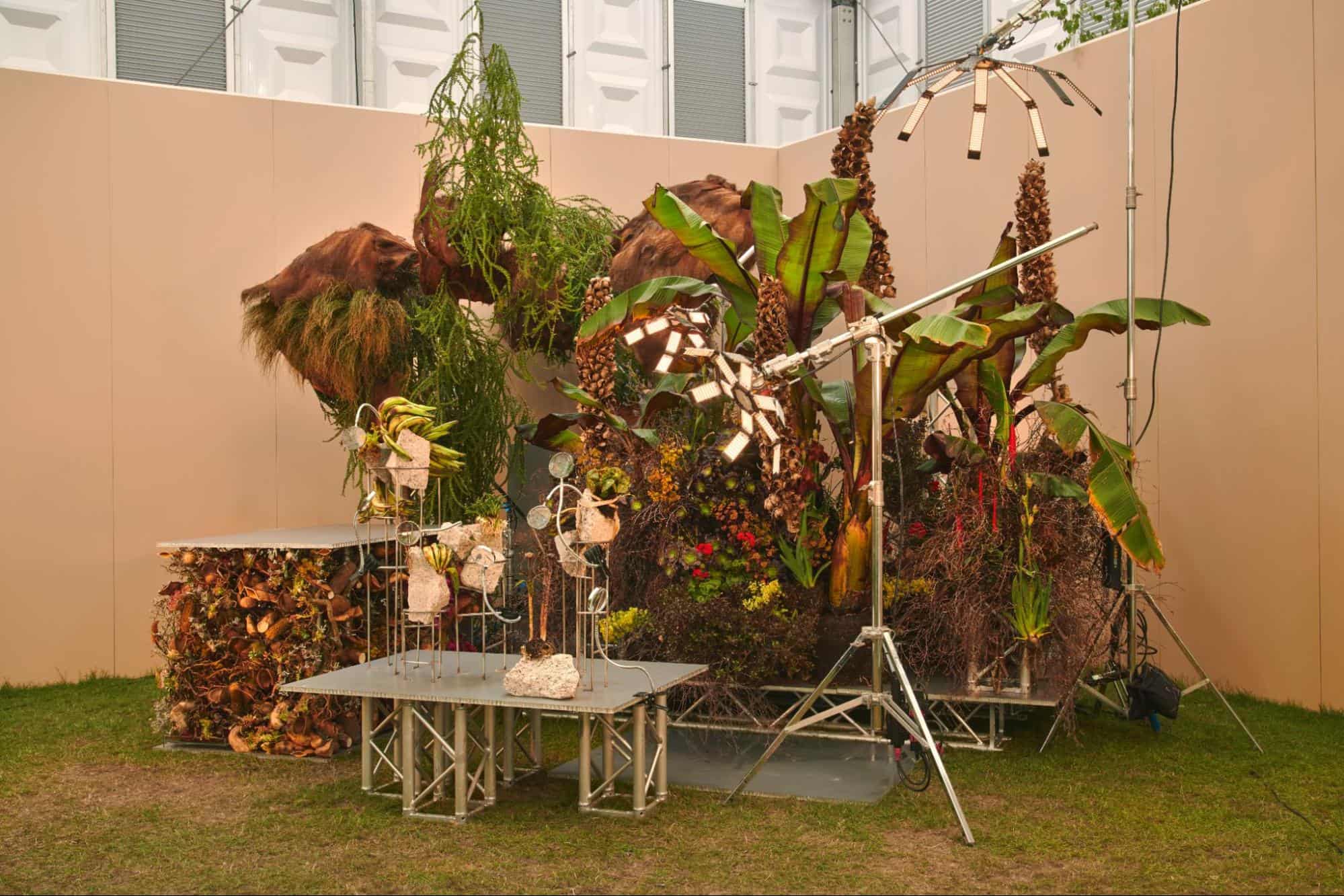
At the Royal Horticultural Society’s two-century-old show, the studio presented a hulking, sculptural tableau — part tropical jungle, part scientific laboratory — that conveyed the distorted, fantastical, and compromised ways in which nature has been viewed, whether by colonial powers or today’s extractive global economy. Instead of a pastoral landscape or a neatly contained bouquet, there were spotlights and magnifying lenses, bunches of plantains, twisting branches, and lumbering palms. The impression left was of a restless, ambitious house: interested in not just appearances, but also ideas.
Most of the time, of course, the studio is doing client work, which means a delicate dance between flexibility and control — balancing client needs, differing opinions within the team, and the vagaries of the natural materials themselves. Some clients arrive with specific briefs, while others come willing to see what the studio wants to serve up, omakase-style.
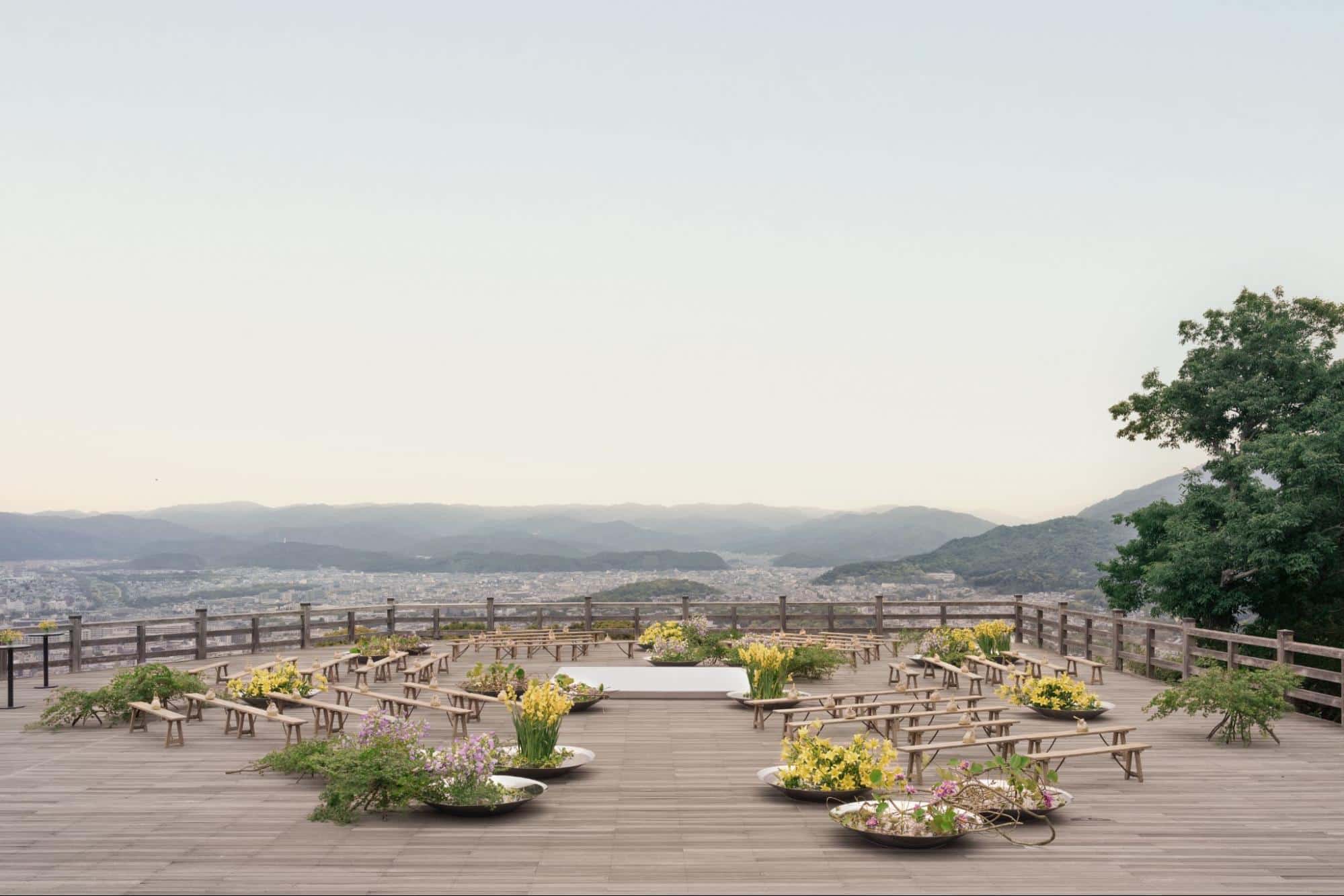
As an example, Lim pulls up photos of a wedding in Kyoto, one of the destination weddings the studio started doing in 2022. Set outdoors on the observation deck of Shogunzuka Seiryuden — a historic Buddhist temple — it’s a dreamy, minimalistic affair, with silver reflecting bowls holding lotus plants and seasonal blooms in soft pastel shades. “We asked a billion questions that were semi-invasive,” he says, “just to tease out things. And we showed them a lot of things to get a reaction.”
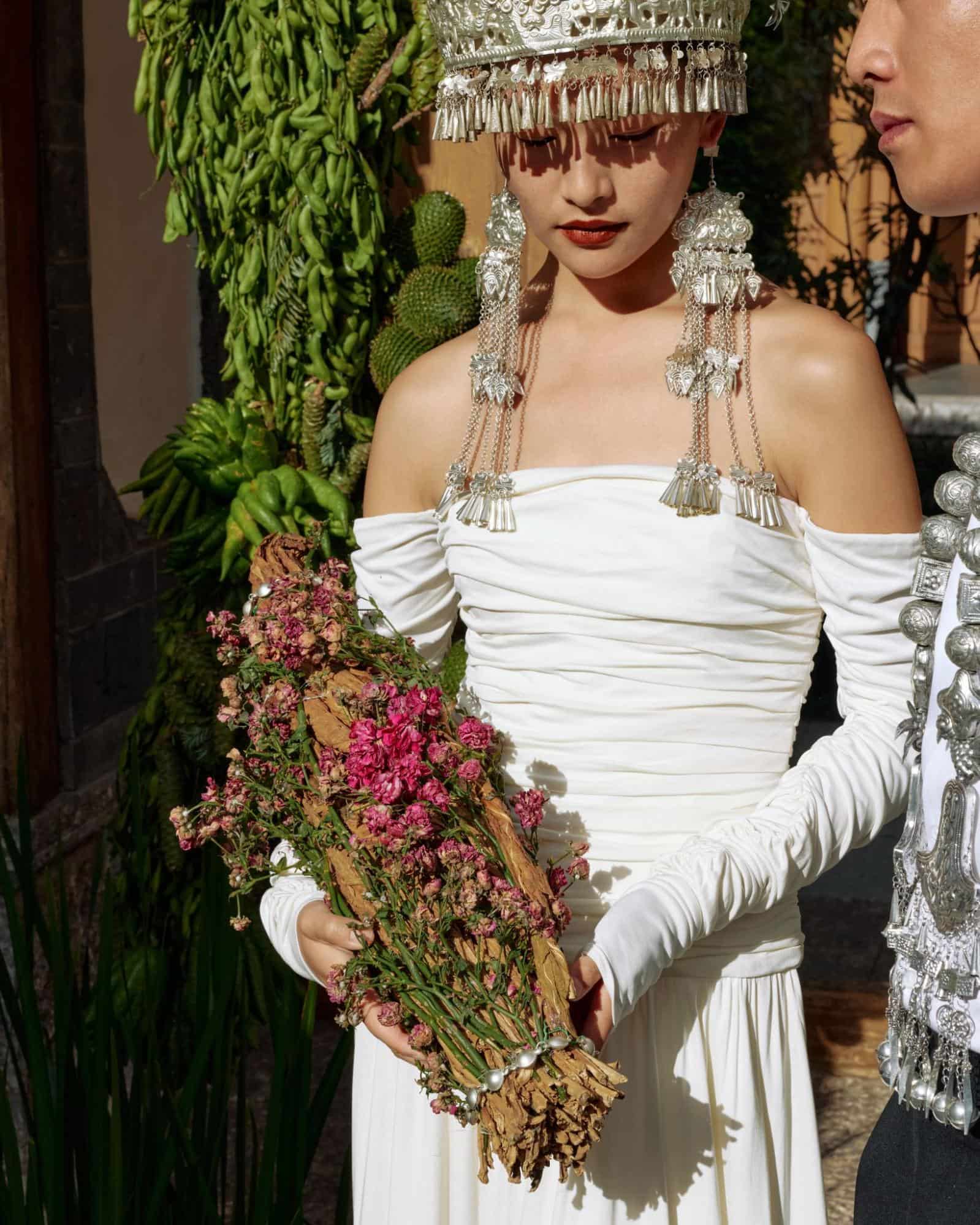
But even when a client is open to far-out choices — like pressed marijuana place settings, or tobacco in the bridal bouquet — there’s still the matter of building consensus within the team. Today, that team comprises 14 staff members, with five in florals and three in landscape design. In keeping with his own circuitous path into the field, Lim specifically recruited creatives with diverse experiences — “No one here has been a career, lifelong florist.” (Former co-creative director Francoise Ozawa, for instance, has degrees in business and biochemistry, while general manager Tan comes from a fashion and marketing background.)
“I don’t think we’ll ever grow very big — we are still quite niche,” Lim says. “There’s a certain magic with a certain kind of team size.”
Behind the scenes
Whether they’re looking at art, dance, music, or architecture, the team takes their sources of inspiration and research seriously. This much is clear from the studio itself, with its carefully chosen art pieces and some impressive bookshelves that Lim fondly calls his “trove.” At the office’s entrance, visitors are greeted by a beaded banner reading “TRUTH AND BEAUTY” and an artwork depicting two kissing snakes (a nod to the brides and grooms who form a key part of the studio’s clientele).
The books are organised around the three main topics of plants, design, and food. Topics range from fungi and modernism to traditional Southeast Asian kueh and video art icon Nam June Paik. Add to this eclectic mix of sources the team’s own observations of travel and daily life — collated using Apple’s shared albums feature — and they have a teeming visual vocabulary to draw from as they concoct their otherworldly botanical scenes. Observes Lim: “[We] infect each other with these things.”
Each week, the floral and landscape design departments meet at the very table Lim, Tan, and I are now seated around, backdropped by a wall hanging of a dense, sumptuous forest scene. They bring sketches, photographs, problems, and ideas. They work things out together, sometimes by asking questions, sometimes by process of elimination — “They go, like, ew, I would never do that,” Lim says. The conversation moves by steps as precise as a book of colour swatches or as instinctive as a gut reaction. And by this slow, laborious, dynamic process, the team finds consensus on matters as subjective and personal as colour and taste.
“I would love to be a fly on the wall at one of these things,” I comment.
“Oh my god, you would not, trust me,” Tan, who’s worked at the studio since 2022, says good-naturedly. “Sometimes it gets very intense.”
All in a day’s work
Even when all that’s done — sketches, renders, and slide decks finalised and sent the client’s way — the designers must still contend with the realities of the materials they work with. Nature is an unruly collaborator; Lim describes, for instance, shuttling flowers in and out of refrigeration to ensure they end up at the level of bloom the studio has in mind.
And it’s not like they can just buy what they want at the store. During a destination wedding in Greece, less than a week after she’d joined the company, Tan recalls, she received an “SOS” from Lim in desperate search of orange trees. “Where am I going to find orange trees? … This was, like, my third day on the job.” (They eventually found a grower just outside of Athens through their audience on Instagram.) “There are times when you’re just like: I don’t know what’s going on. But that was a core memory for me.”
So dynamic and unpredictable is the work, in fact, that Tan’s coined a hashtag for it: #JADITTH, standing for “Just Another Day in This Humid House.” “No day is really typical,” she says.
For its local projects, THH tries to source its materials close to home. While Holland may be the world’s largest flower exporter, the studio balances out its reliance on Europe with blooms from Thailand, Indonesia, and Taiwan. Faced with supply chain disruptions during the pandemic, they also started their own private cutting garden in 2020, where they continue to grow neat rows of cacti, agave, and heliconias, as well as materials which would otherwise be difficult to find.
Sourcing locally also aids the studio’s efforts towards sustainability. When working on overseas projects, they trawl markets and gardens for what grows there, which also allows them to find more localised, culturally significant plant materials — sustainability and storytelling coming neatly together.
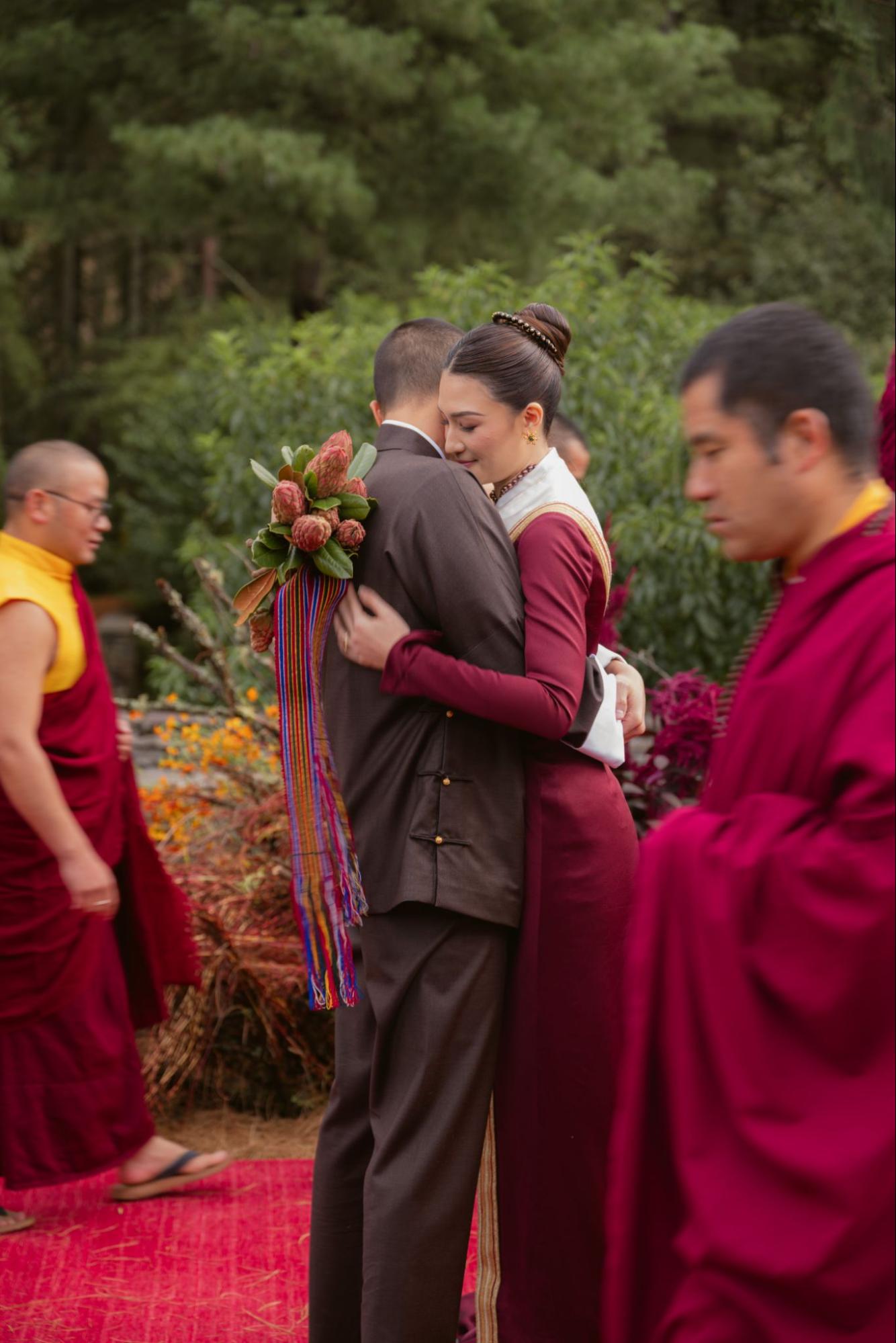
Take, for instance, an autumn wedding they designed last year in the historic valley town of Paro, Bhutan. Amidst the region’s many temples and monasteries, THH crafted a mazy sprawl of paths made from yellow-green rice straw, shaded at the edges with foraged pine needles. Other materials — apple branches, flamelike amaranth and water primrose — were also sourced from local contacts, farmers, and even strangers.
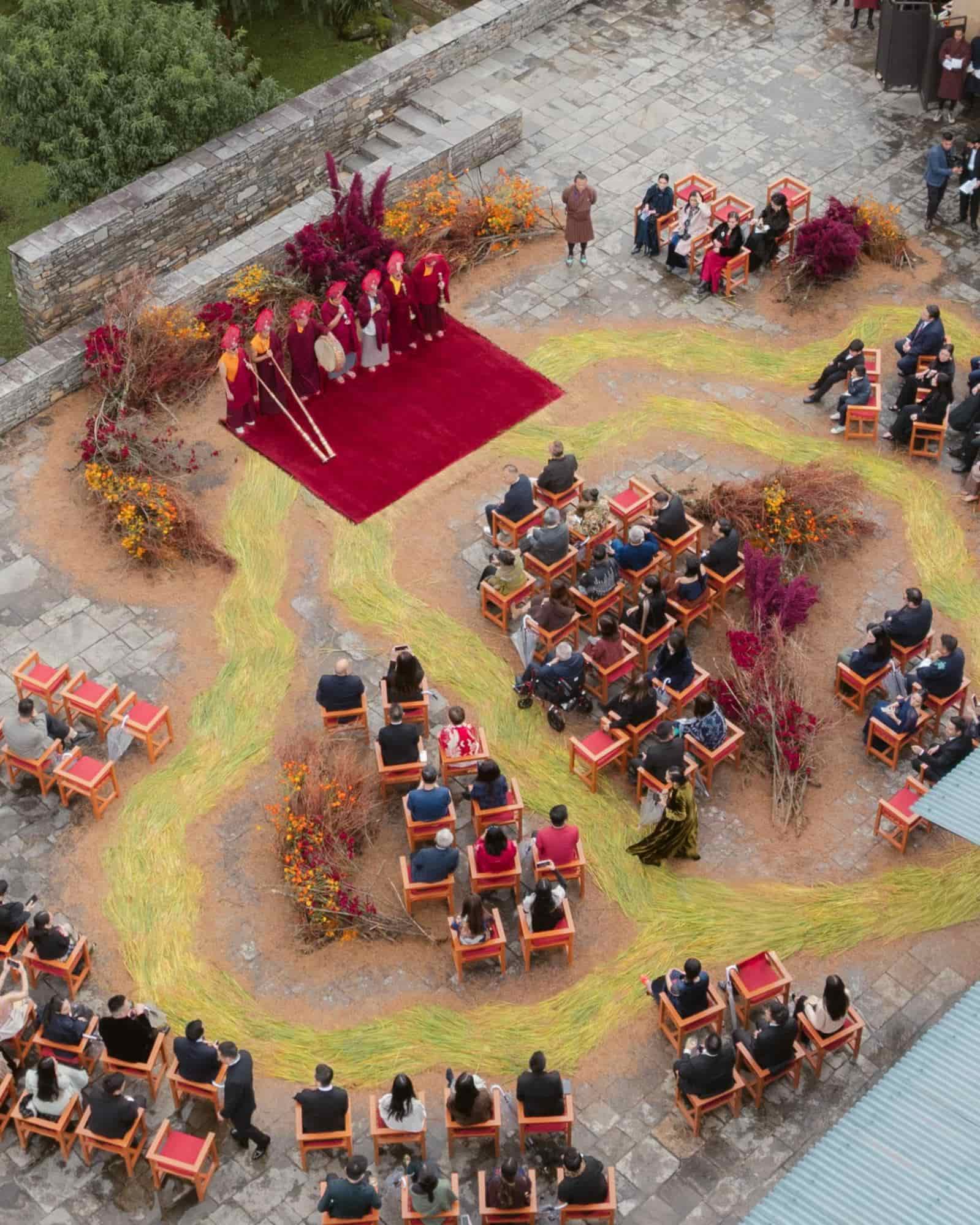
“We went there about six days prior to the wedding,” John says (following an initial site visit in spring), “and the entire wedding was procured from items that were completely local. I literally went there with a pile of cash, knocking on people’s [doors], with a translator, and just buying stuff from people’s gardens […] I saw this amaranth growing in someone’s farm and was like, I need it.”
Do they ever get rejections? “Of course,” Tan says.
“But you know what? You’d be surprised,” Lim adds. “It’s more yes’s than no’s.”
Thus the studio’s spectacular results, from a “river of cotton” in Ahmedabad to sculptural, tinsel-draped arrangements of fruit and fronds for a Singapore Art Week party, are achieved through a potent mixture of skill and improvisation — assiduous research, networking, and planning supported by the ability to use what is on hand.
This give-and-take dynamic extends to their approach to sustainability, which is more adaptable than prescriptive. If a client’s long dreamed of out-of-season lily of the valley for her wedding, they’ll make it happen, but they aren’t above a bit of clever trickery, like swapping South African proteas with more easily available lotus buds. “It doesn’t have to be the exact same material,” Lim says.
Besides careful sourcing, a major step the studio has taken is eliminating, as far as possible, the use of petroleum-based, non-biodegradable floral foam to secure their arrangements. Instead, they use kenzans — reusable metal pin frogs hailing from the Japanese ikebana tradition. “There are things like this, on a day-to-day [basis],” Tan says, “that we try to incorporate and remind ourselves to keep pushing, to try and make it more sustainable.”
Journey to the west
In 2021, THH set up an outpost in Paris, from which Ozawa, still co-creative director at the time, hails. There, they undertook projects including collaborative exhibitions, workshops, and an artist residency at the flagship store (now closed) of clothing brand Palm Angels, along the upscale shopping street Rue Saint-Honoré.
While the studio has since closed its Paris office, Lim still considers the three years there a useful form of cultural exposure — an “important lab” — for his team. Florals in Asia, he suggests, typically appear on special occasions, but in Paris they can be an everyday affair, picked up with groceries or the morning paper. “There’s a kind of code with people who use flowers on a daily basis. You need to use things in a way that feels effortless, seamless, and not ‘too much.’”
But, simultaneously, he adds, “They also have a huge legacy of flowers used to symbolise power, with the bourgeoisie. Learning those codes was very, very interesting.”
Cultural exchange, of course, goes both ways — and a youthful tropical studio coming up against more settled old-world traditions can sometimes produce unexpected reactions. “What I find,” Lim says, referring to the botanical design market in Europe, “is that there’s perhaps a little more resistance to doing things differently.”
This conservative bent contrasts even the similarly rigorous Japanese ikebana tradition, which has many distinct schools and a history of avant-gardism — twentieth-century practitioners who were, Lim quips, “using turnips everywhere.”
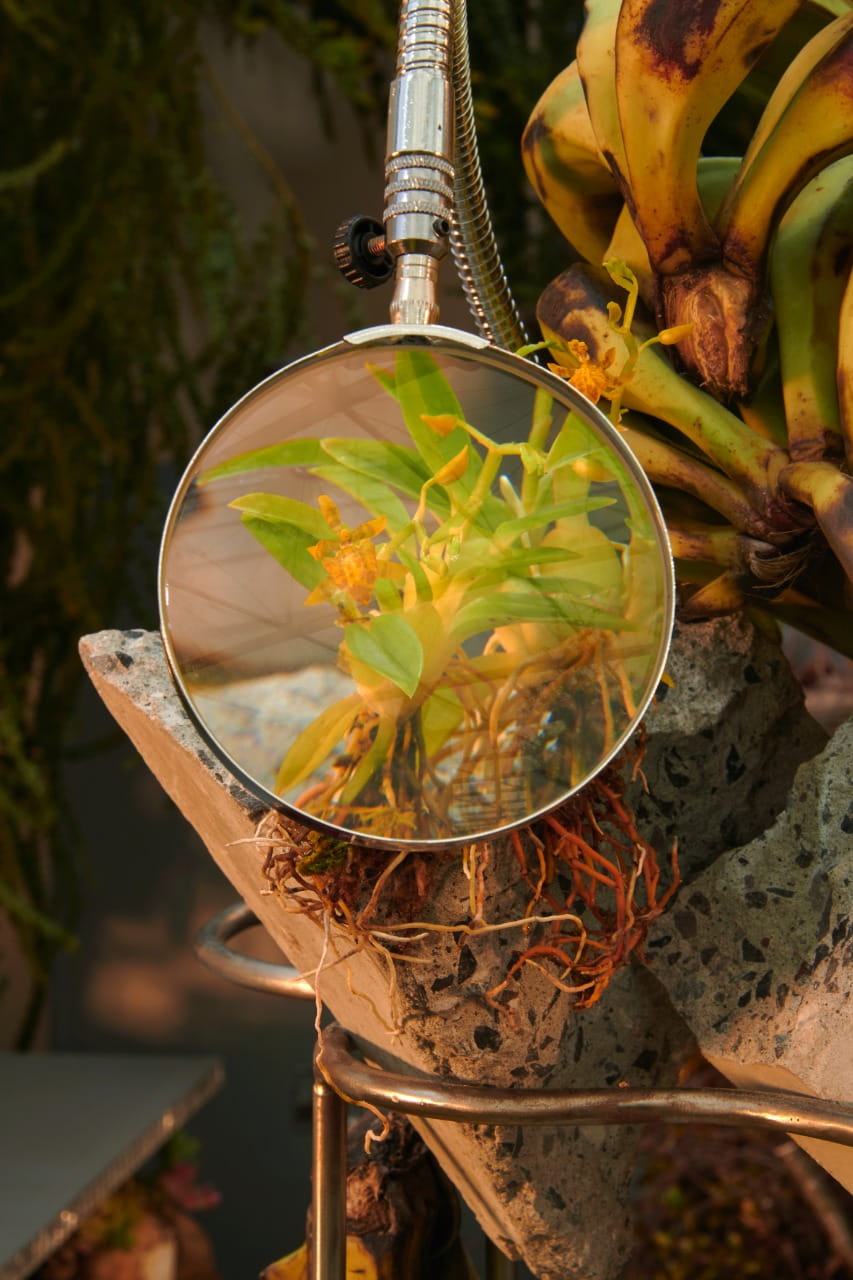
Tan recalls puzzled responses to their work at the Chelsea Flower Show: “Everything’s very pretty and perfect — we put in this piece that was completely monstrous, lit up. Very, very English people stop by and they’re like: ‘What is this? What monstrosity is this?’”
“There will be people who tell you to your face, ‘I don’t like it … What are you trying to do?’ And you’re just like: ‘Start the conversation, that’s what we’re trying to do!’”
What’s cooking
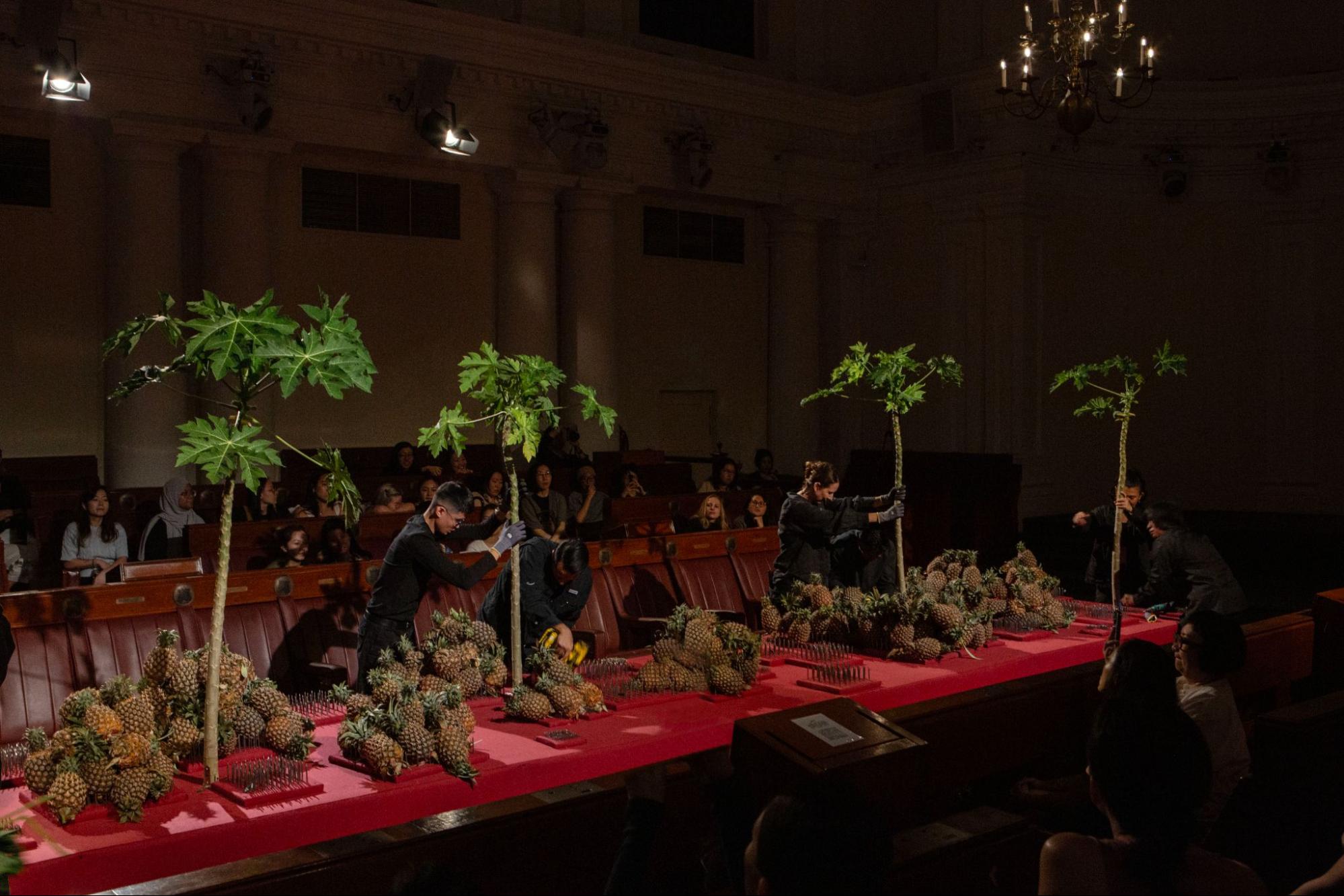
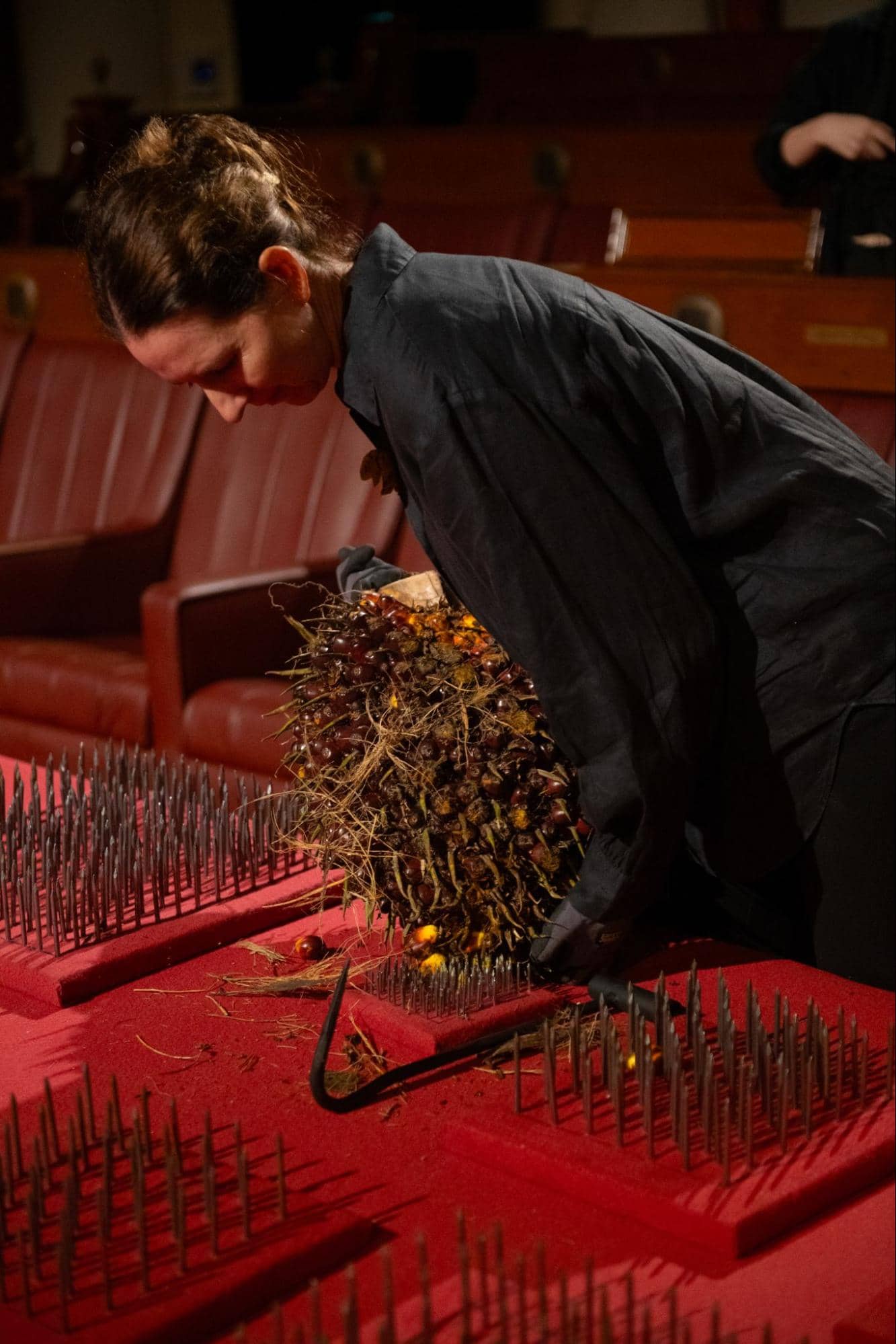
Closer to home, THH continues to expand their practice in new and variegated ways. (In 2024, for instance, they staged their first public performance Soft Power, whose choreography revolved around plants significant to Southeast Asian histories, like oil palms, tiger orchids, and whole pineapples speared dramatically on beds of upturned nails.)
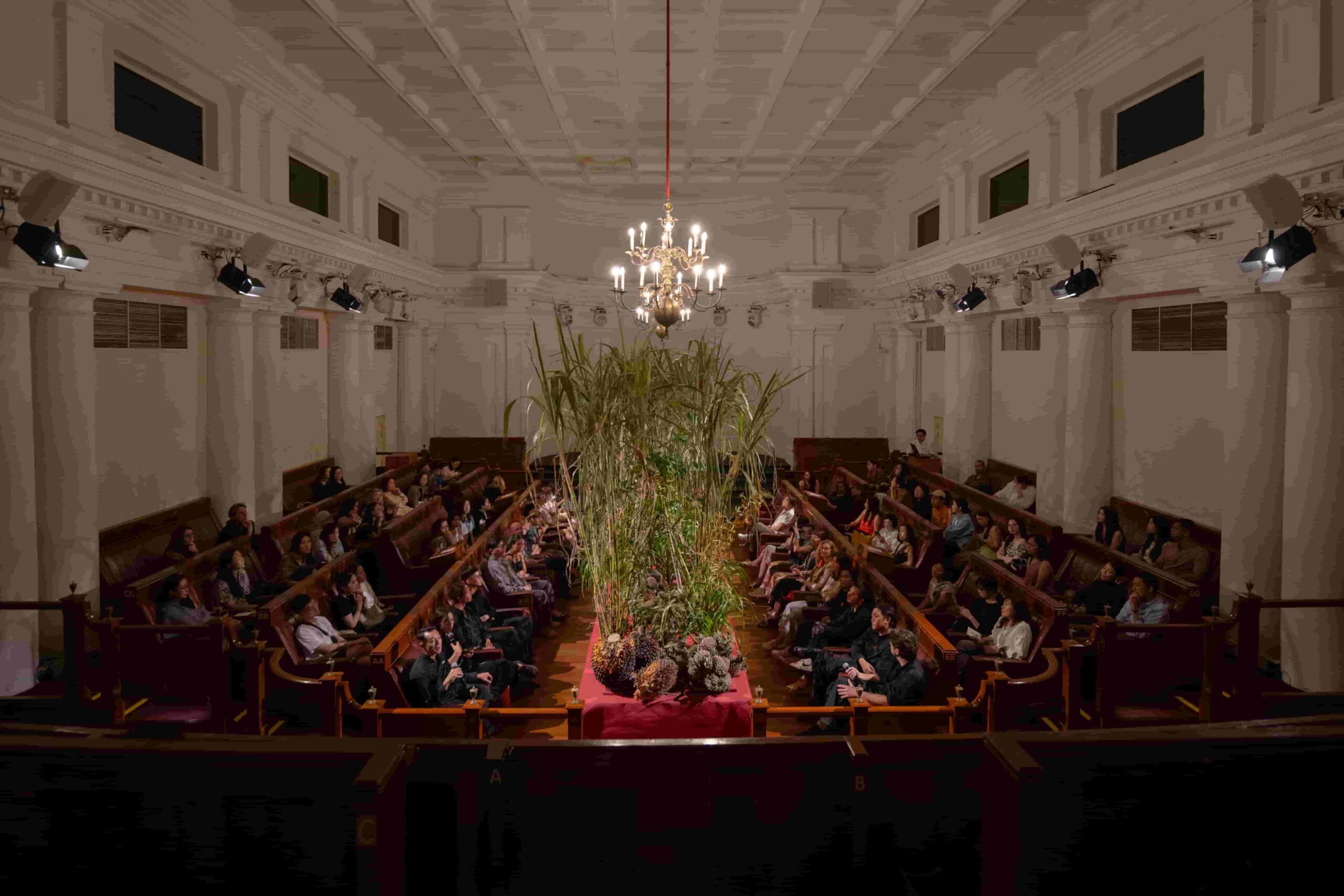
By Lim and Tan’s invitation, I drop by one Sunday evening for an iteration of THH’s Senang Supper Club, a private dining experience and chef-in-residence programme which unites the studio’s interests in florals, food, and hospitality.
“I think people, Singaporeans especially, are able to talk about food in a very complex and nuanced way,” Lim explains, pointing out the “hyper-local” awareness which allows obsessive foodies here to identify minute differences between, for instance, Katong and Siglap Laksa. “In a way, we are trying to do with flowers what people have done with food here.” THH launched the club in 2023 with the help of first resident chef Bryan Koh, an old classmate of Lim’s and a food researcher with the exact sort of “nerdiness” he was looking for, serving up menus inspired by the lesser-known cuisines of Southeast Asia.
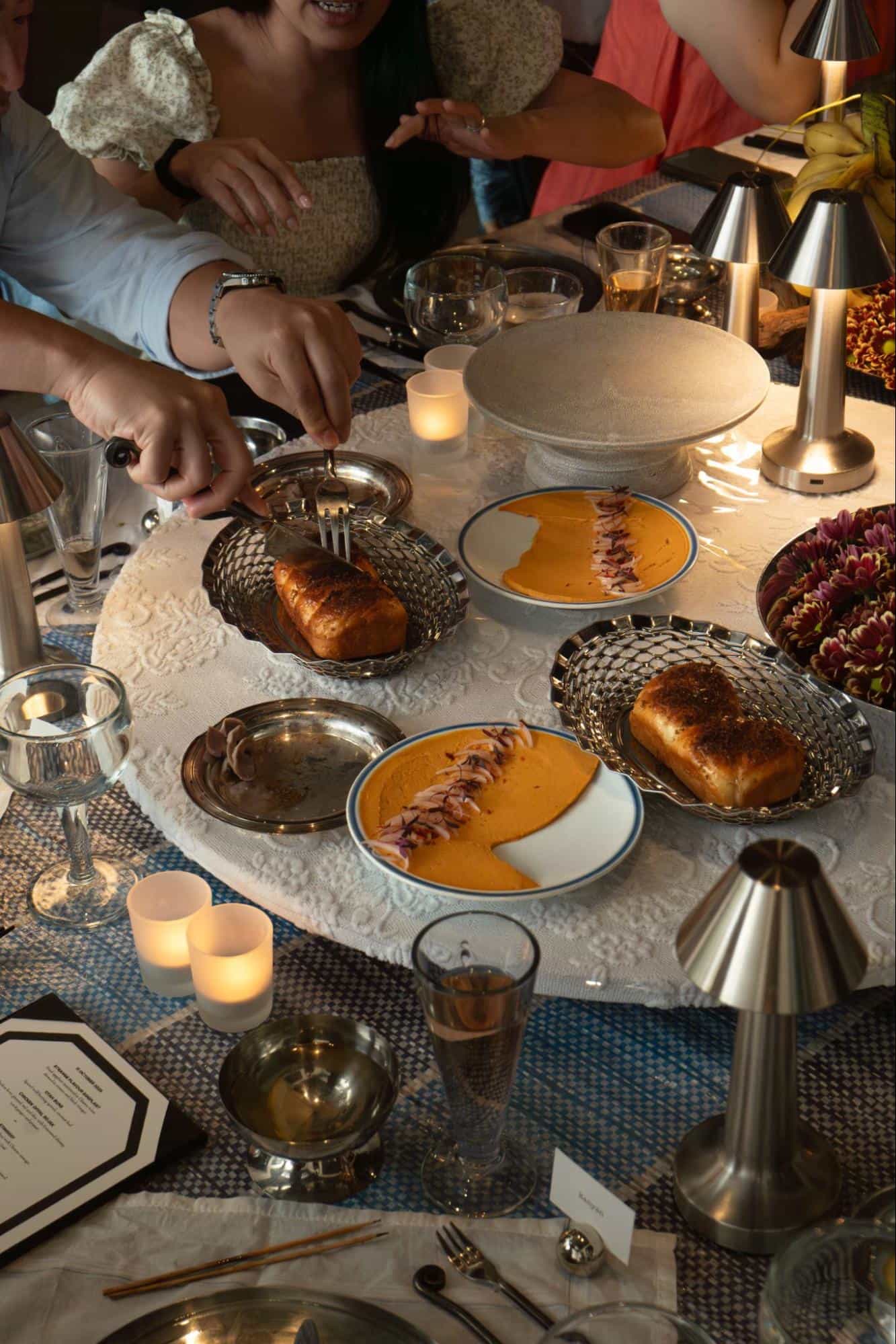
The night I attend, self-taught resident chef Marcus Tan is presenting Strictly Pasar, a 10-course menu celebrating the wet market as a bastion of Singaporean food culture. The table is set with glowing tealights, blue construction tarps, and bunches of bananas; we’re issued a pop quiz with questions on the cost of bean sprouts and the name of the “hot veggie seller” in Tekka Market. The guests around me hail from a variety of professional backgrounds — fashion, fine dining, copywriting, medicine — all brought here by the promise of a good, thoughtfully crafted meal.
Over the next few hours, we’re front row at a truly spectacular dinner, which kicks off with the Chinese-inflected “Strange Flavour Eggplant” and doesn’t let up till its final course of “Malay cake” with caramelised banana ice cream. We’re regaled with pillowy otah buns, smoky chicken offal skewers with a gelatinous crunch, and mango pudding shaped like a koi fish, swimming in a sea of sago. My personal highlight is “Chicken Soup for the Spent Singaporean Soul”: a soft meatball in a broth fragrant with lemongrass and delicately perfumed with kaffir lime.
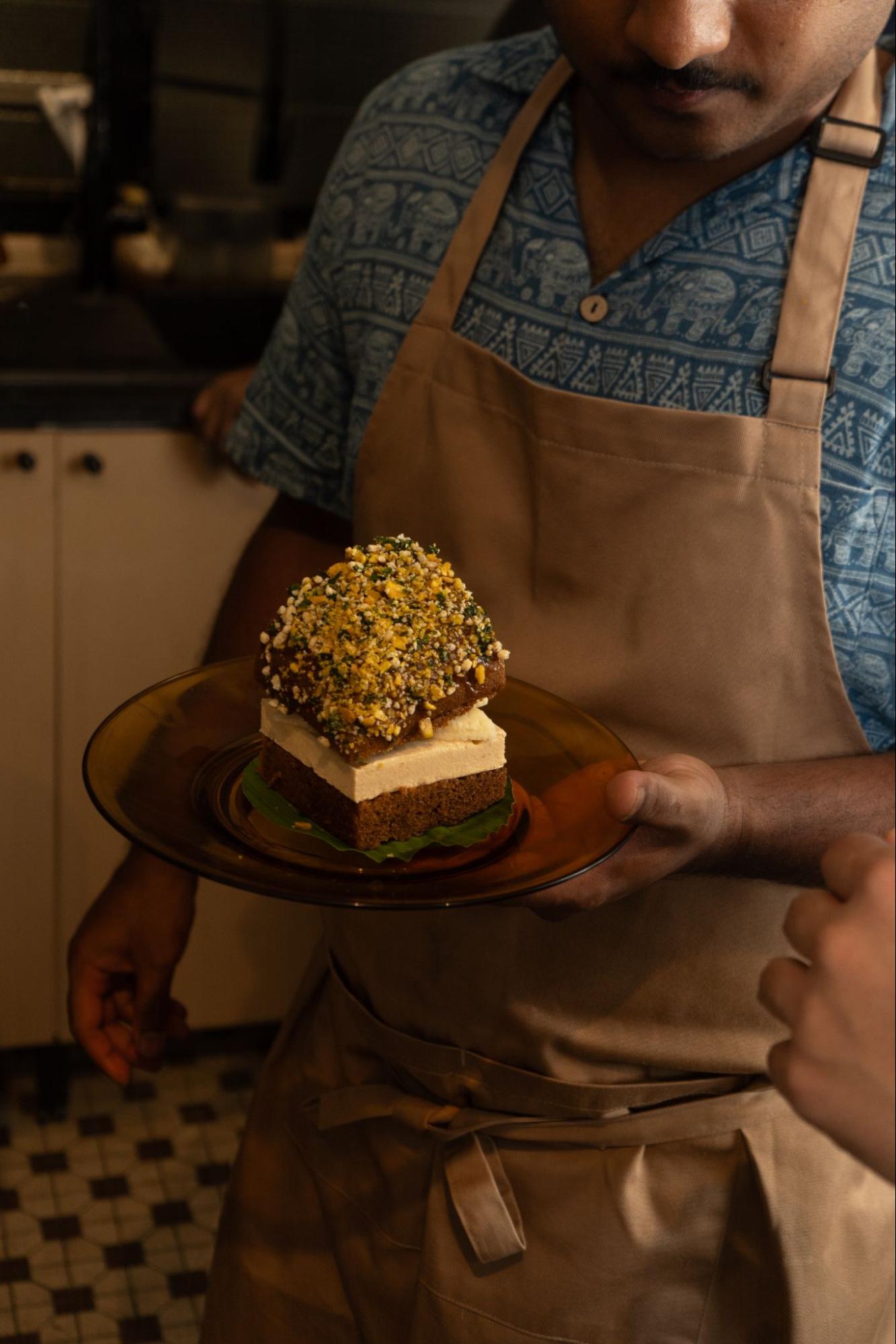
The food is comforting yet unexpected, familiar yet strange, and not so intellectual that it becomes difficult to understand. In this way, it’s a bit like the work of the house itself: grounded in careful research and unusual materials, instinctively grasped through sense and feeling, taking what is known and pushing it just enough.
As a studio, THH seems content to exist with tensions like these. A sort of push-and-pull dynamic emerges, for instance, between even the studio’s two key departments (both of which Lim leads). Floral design is about the “fleeting moment,” he observes, while landscape design plants for the future. “You’re anticipating how it’s going to grow and mature — in a sense, you’re kind of designing for forever. There’s a constant tension between those desires.”
Perhaps tensions and contradictions are where true creativity lies. Early in our interview, Tan tells me that others — grant-giving government bodies, for instance — find them difficult to pin down. Unlike graphic design studios or architecture firms, she says, “we don’t necessarily fall into any category.”
“We’re literally in the in-between space,” Lim adds. From a team that draws so voraciously from different disciplines, and which seems equally happy to create an ephemeral performance as a lasting landscape, these observations come across less as grievances than simple statements of fact.
And, judging from Lim’s tentative interest in exploring more “permanent” fine art pieces, THH isn’t going to rest on its laurels anytime soon. (Case in point: They’re currently working with Sri Lanka’s Geoffrey Bawa Trust on an exhibition and workshop, which will happen at the late architect’s sprawling Lunuganga Estate later this year.)
But whatever they do next, the studio is sure to continue creating experiences for its clients and audiences that are both considered and spectacular, that touch both thought and feeling. As Lim says: “Sometimes, we’re really not trying to create an object so much as tell a bit of a story.”
___________________________________
Follow @thishumidhouse and @senangsupperclub on Instagram for the latest updates, and visit humidhouse.com and senangsupperclub.com to find out more.
Support our work on Patreon
Become a memberYou might also like


In Retrospect With Sonny Liew — The Art of Charlie Chan Hock Chye: The Exhibition
