Warm light. Careful hands. Cool air. Hushed, hurried voices and the playdough scent of drying paint and wet putty. Stretched tape and tarps unfolding. Coloured lasers, paint cans, power drills, dust pans. Ladders percussively opened and closed. The purposeful clamour of talk and tools alongside the urgent quiet of work, waiting, and deliberation. These are the sights and sounds of an exhibition stirring.
Although writing about exhibitions tends to consider them in their most “finished” or consummate forms — that is, the polished, apparently “complete” showcases we visit in galleries — the life of an exhibition begins long before opening night (and, indeed, continues long after). Curators and installers bring a show to life through meticulous research, planning, design, and, finally, construction. Behind the scenes, vision meets reality; logistics become an art.
Moreover, as installers we spoke to at the National Gallery Singapore in the middle of 2025 emphasised, every exhibition is unique. Each show presents distinct practical challenges and creative opportunities for its art handlers and artwork management team, for whom improvisation and expertise go hand-in-hand to ensure a successful installation. For those who handle art at such close quarters, this is another way of viewing, encountering, and knowing works — another way of touching, and being touched by, art. An exhibition comes alive not just for its public audience, but in these more intimate moments too.
This photo essay reveals scenes from this lesser-known life of an exhibition. Taking its cue from the exhibition in question (a revamp of the Gallery’s second DBS Singapore Gallery, which focuses on the art of a burgeoning cosmopolitan nation-state in the industrialising mid-twentieth century), the essay begins not at the beginning but in medias res. We follow art installers and curators as they build and organise an exhibition space. We glimpse artworks and their doppelgängers in strange states and spaces. We observe how paintings frame people and people shape place. And we linger on the collective effort that makes an exhibition possible.
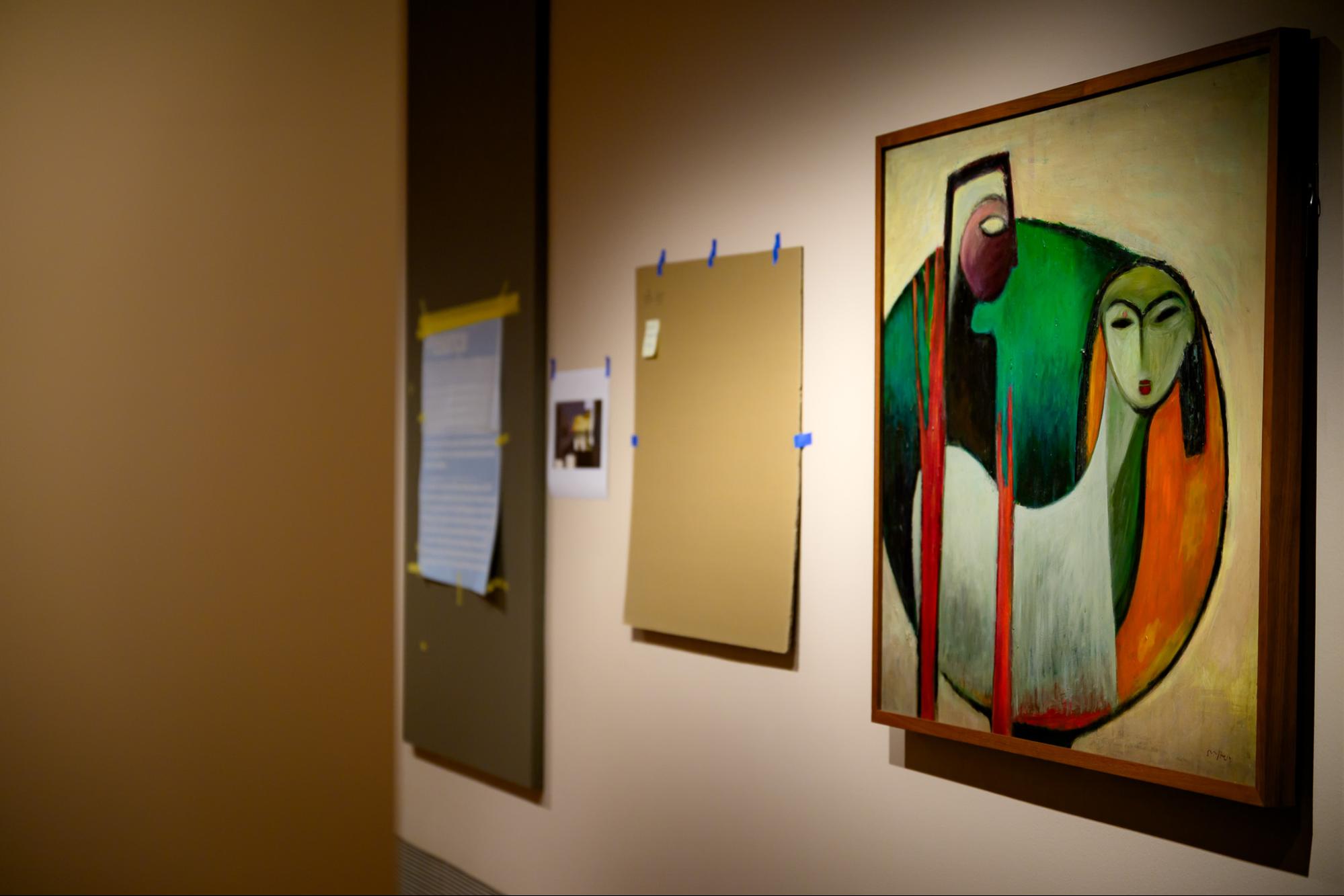
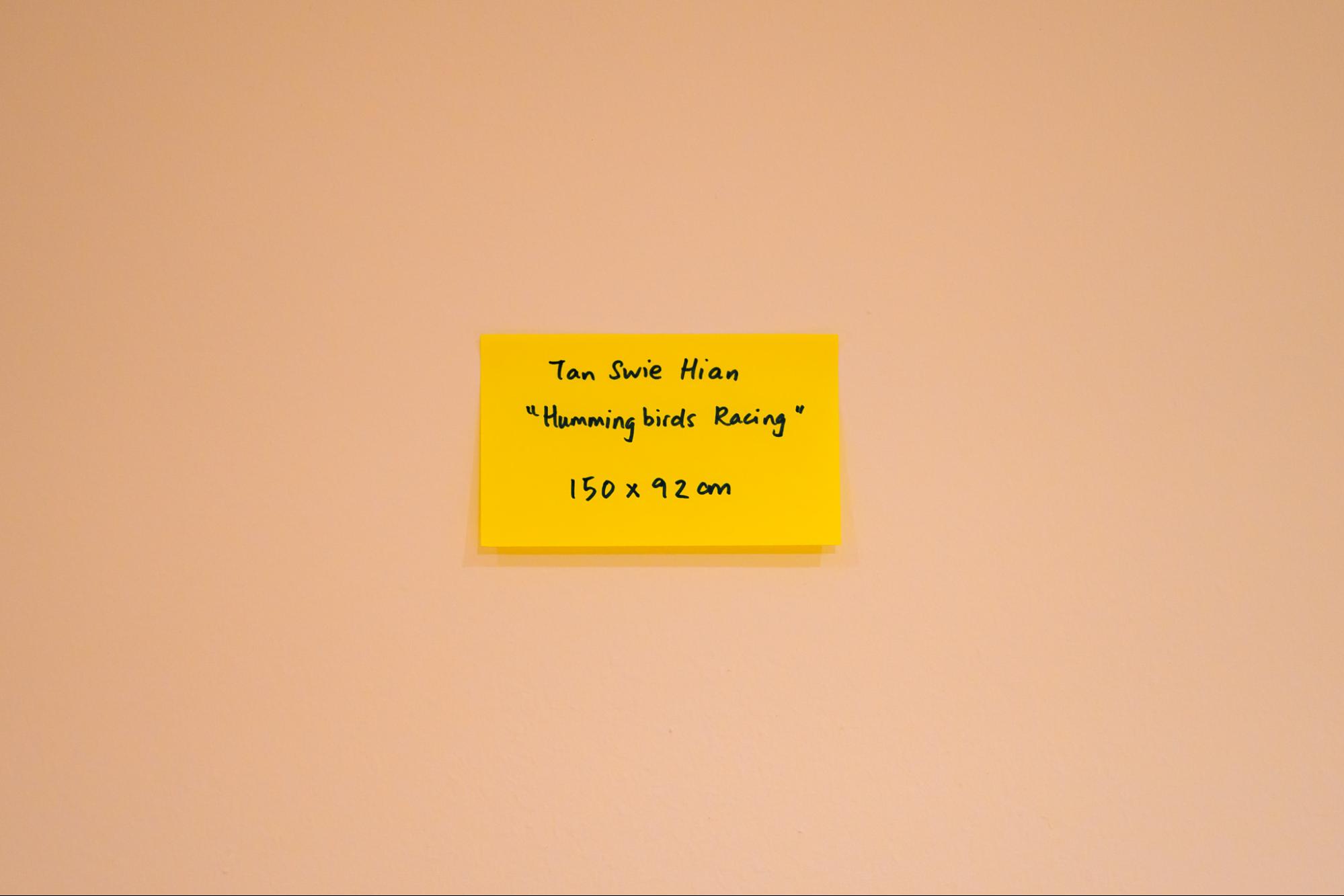
1. The team uses cardboard mock-ups to visualise where artworks will be placed.
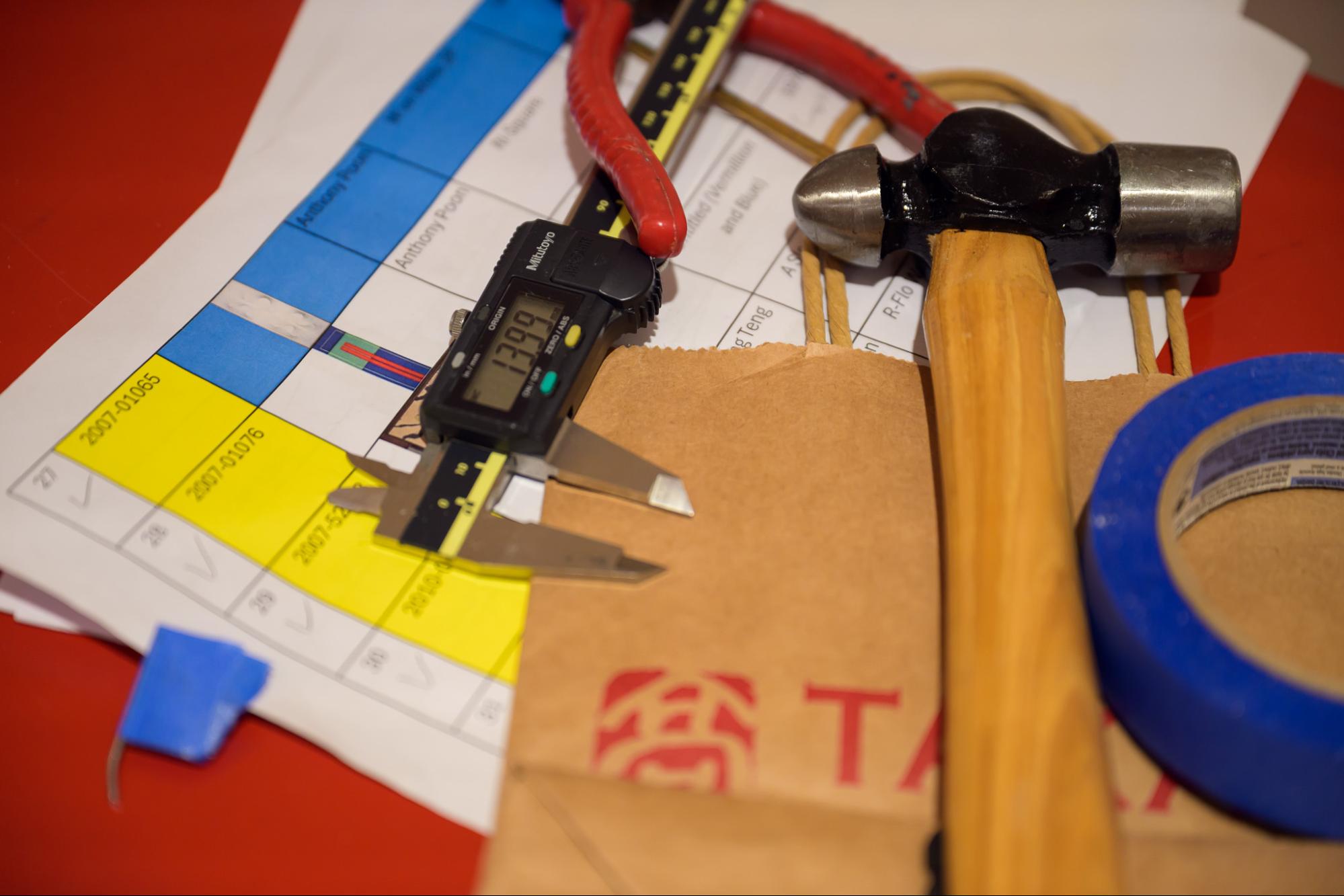
2. Art handler Rashid measures an artwork before installing hooks for it on the wall.
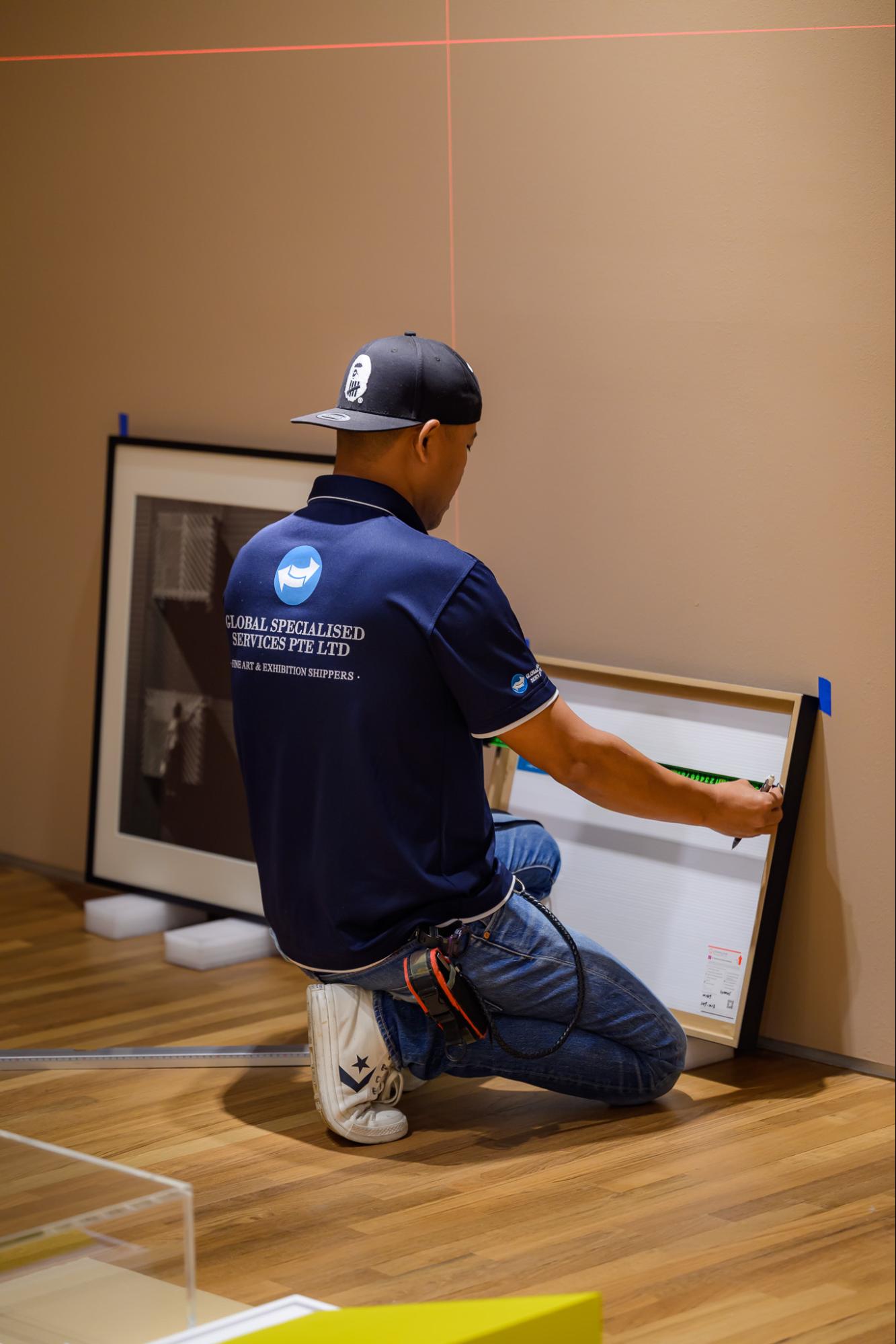
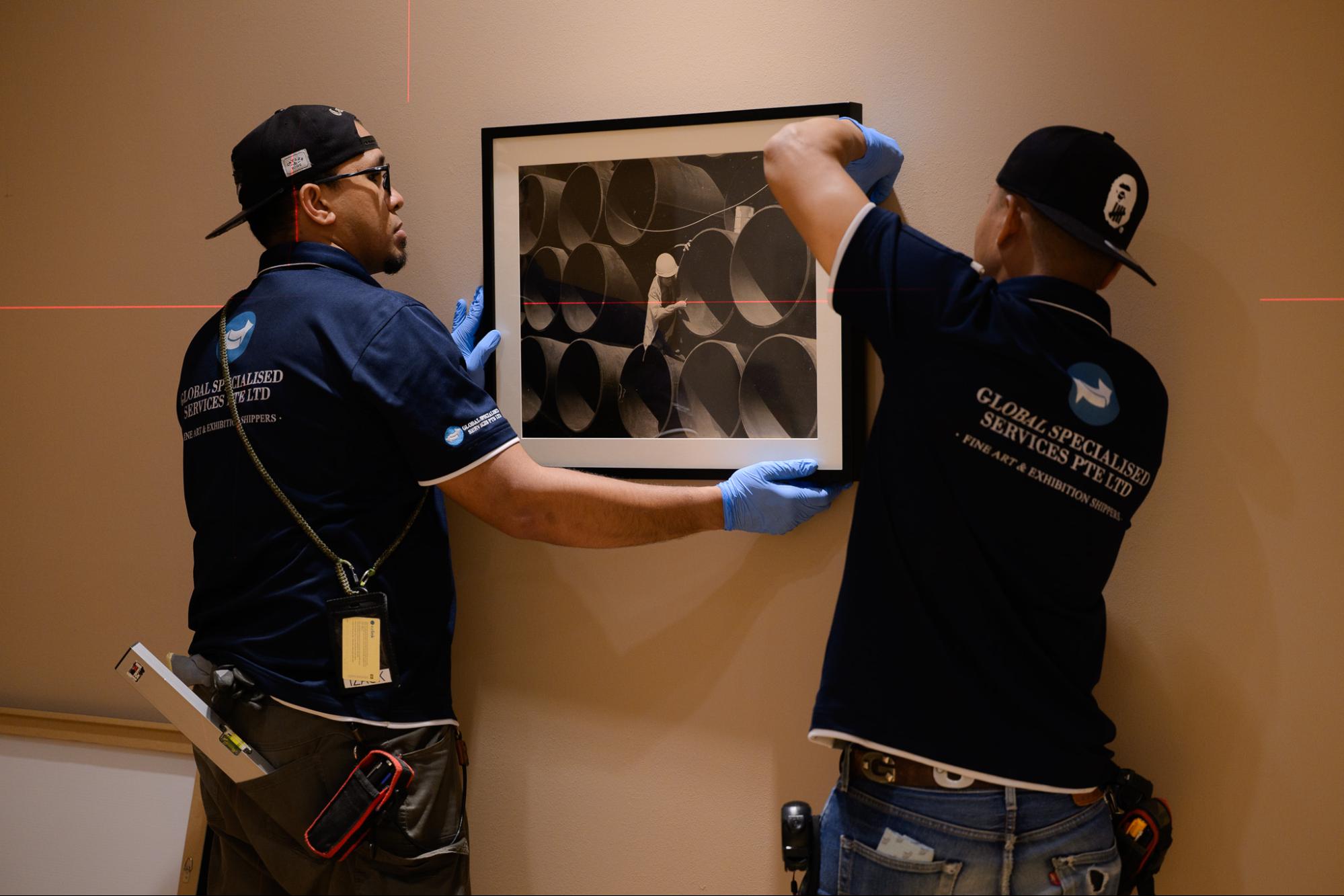
3. An art handler from Global Specialised Services, the art logistics company engaged by the Gallery, surveys his work.
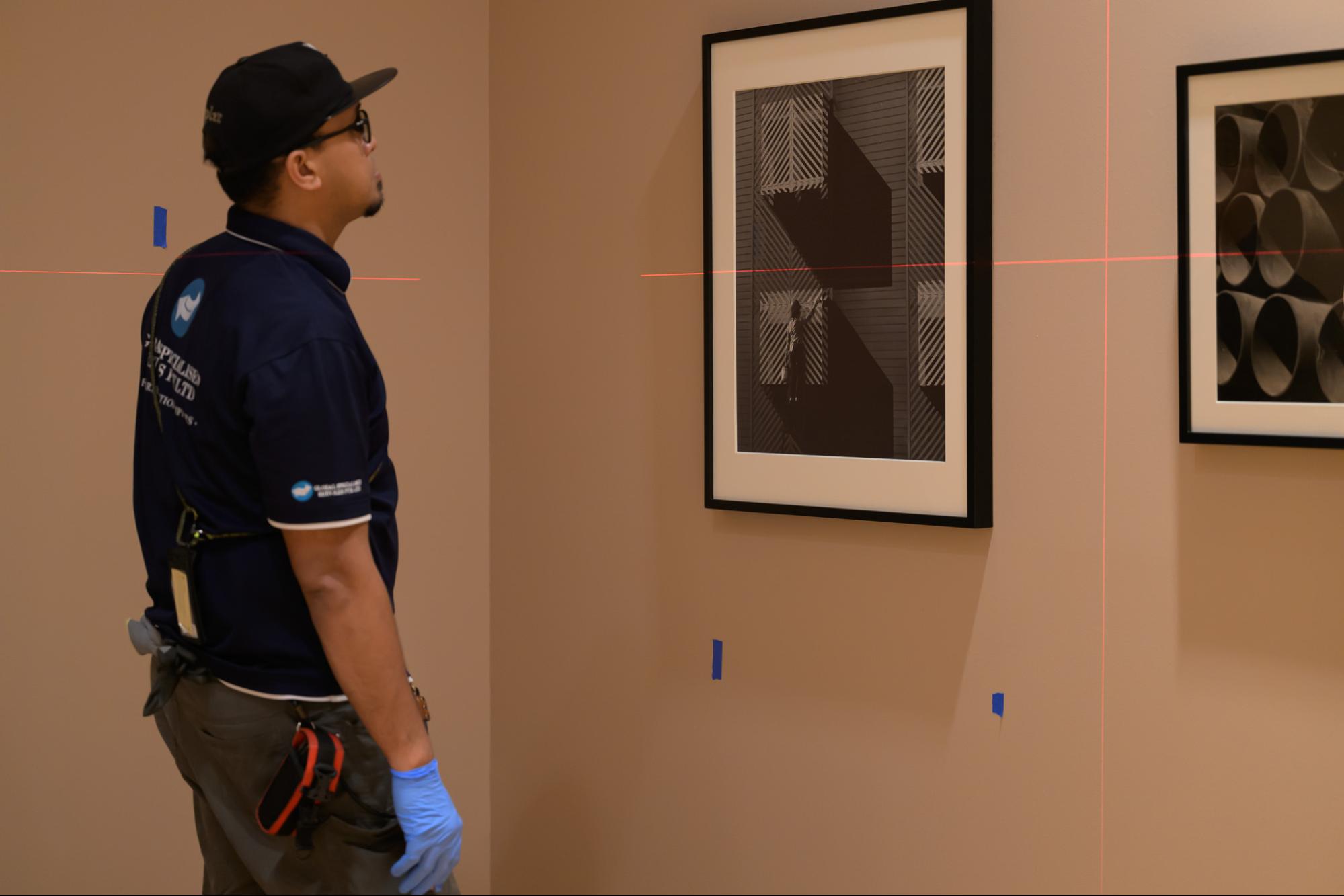
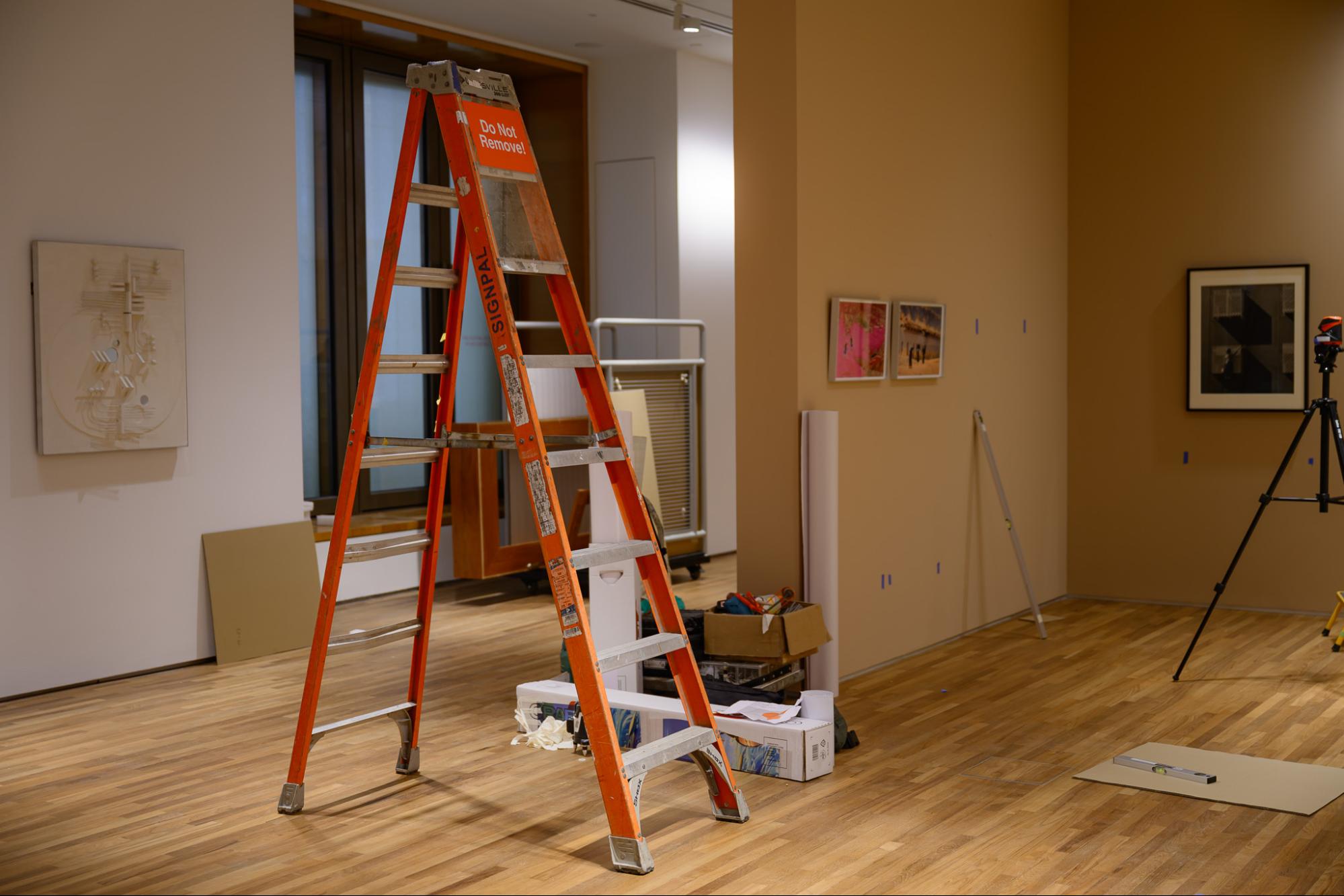
4. A ladder is used to hang a textile work from the ceiling.
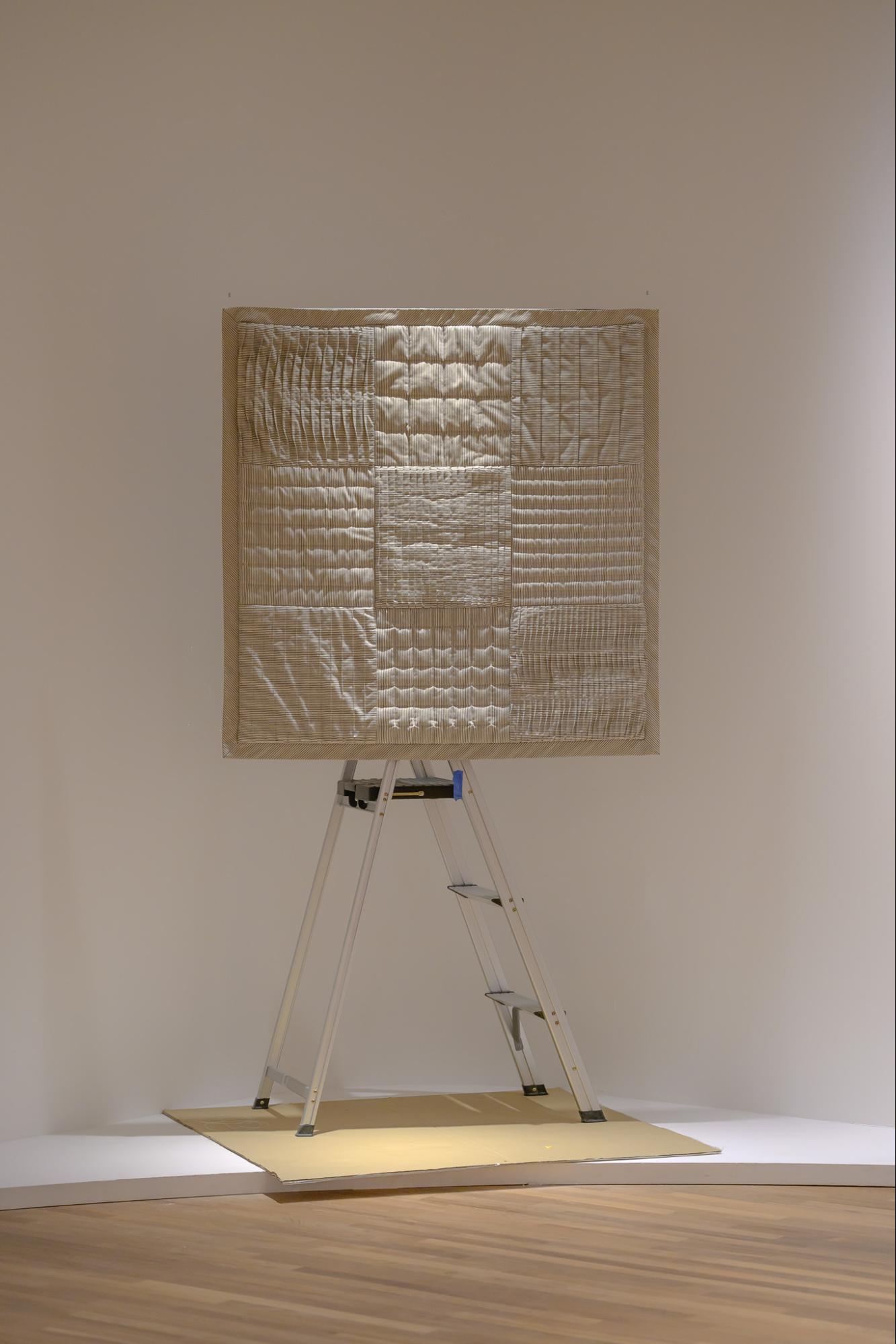
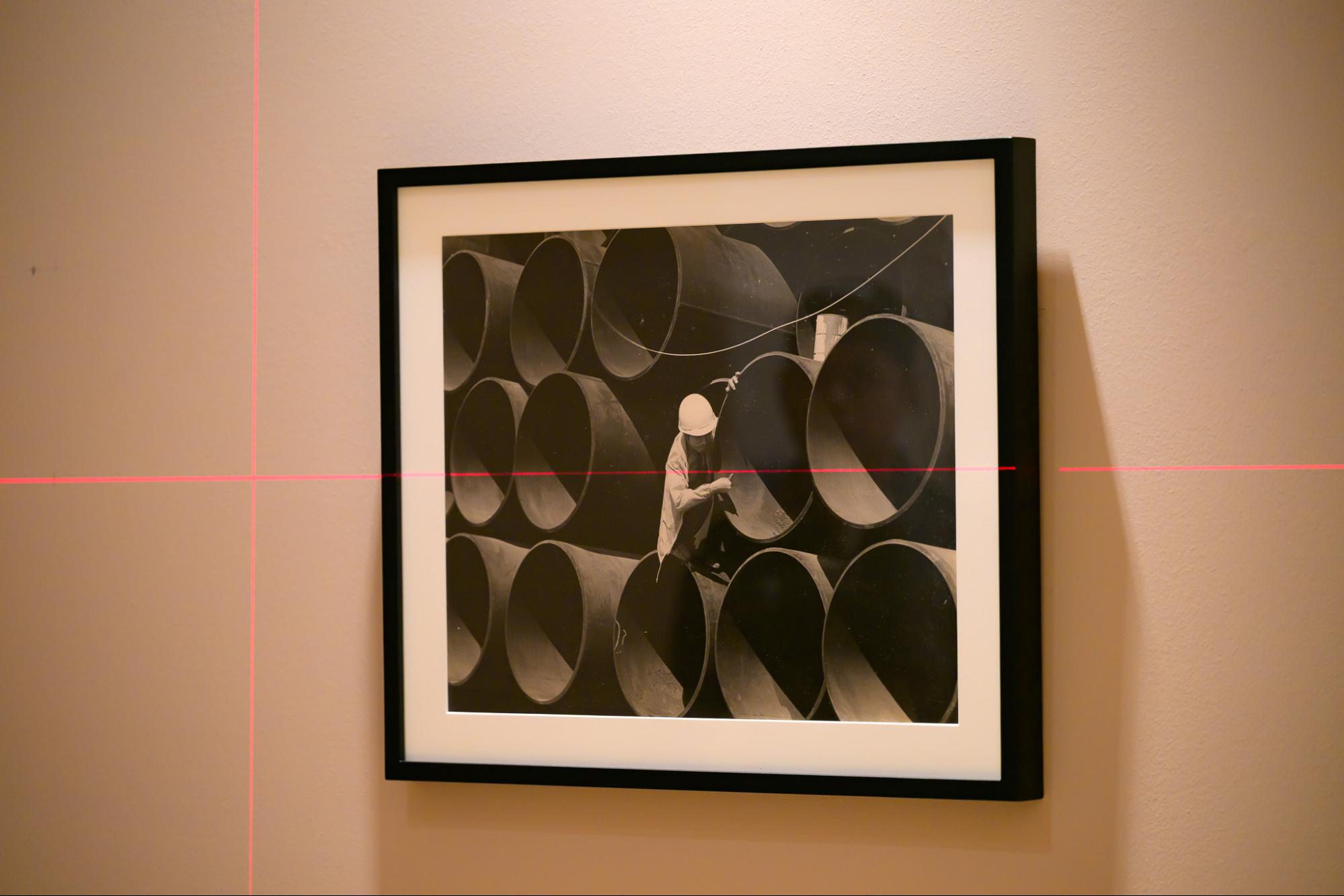
5. Laser levels cast horizontal or vertical beams across ceilings, walls, and floors, helping handlers to place artworks correctly.
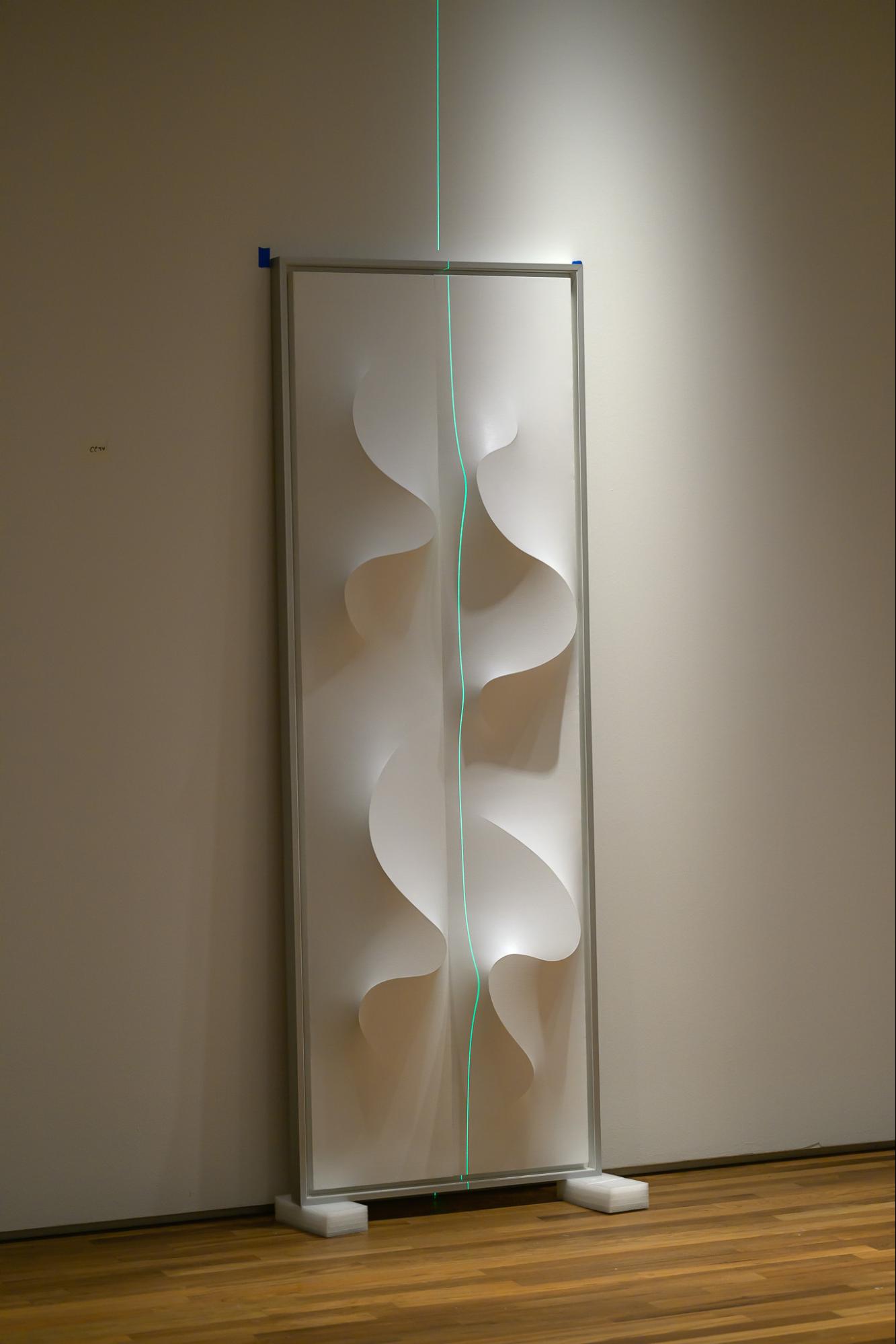
6. Handlers use laser levels to ensure artworks are parallel to the ground or to align multiple works on the same wall. Since laser levels can drift over long distances, they may concurrently use the more traditional water levels to ensure accuracy.
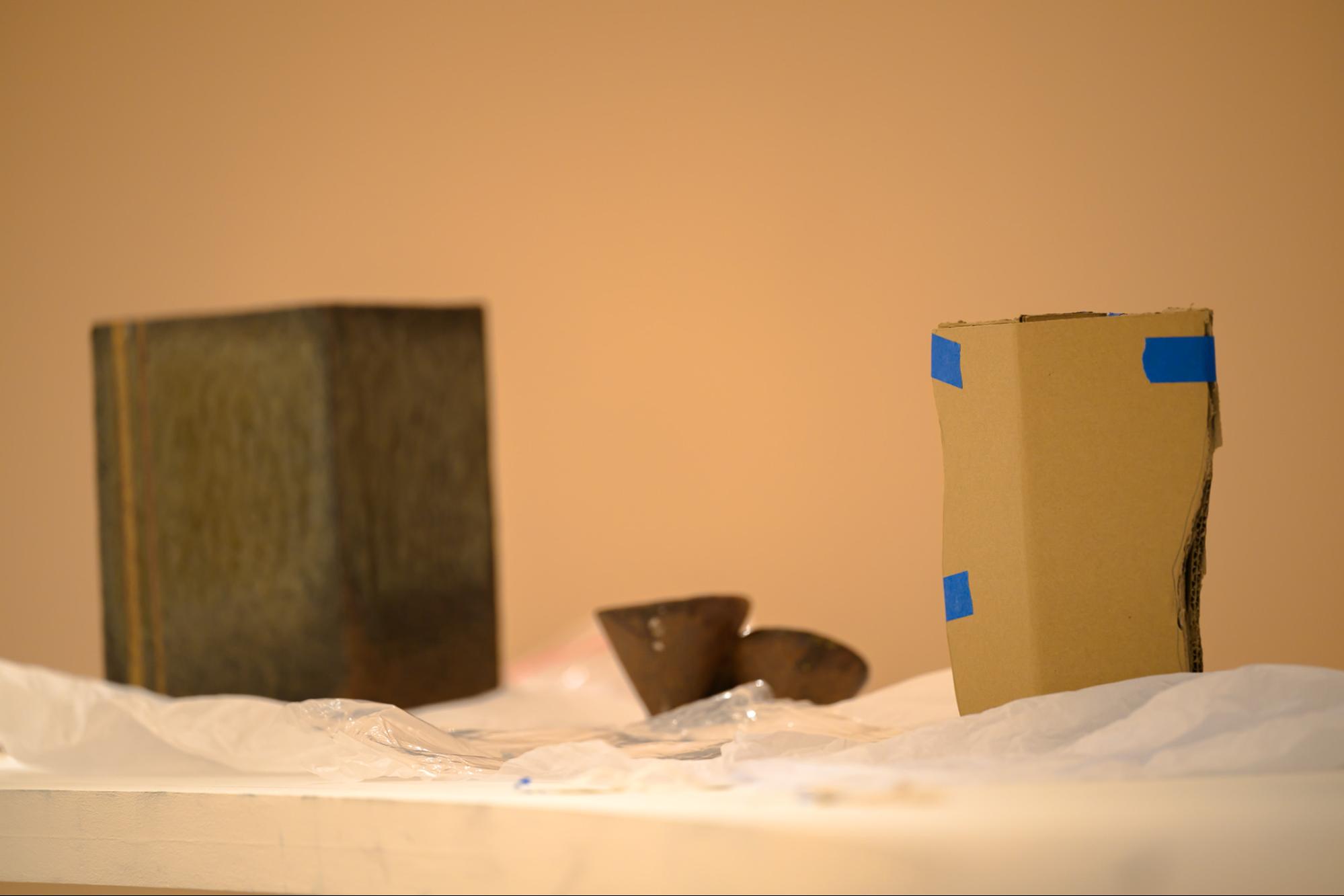
7. A three-dimensional cardboard mockup stands in place of one of Suriani Suratman’s ceramic sculptures.
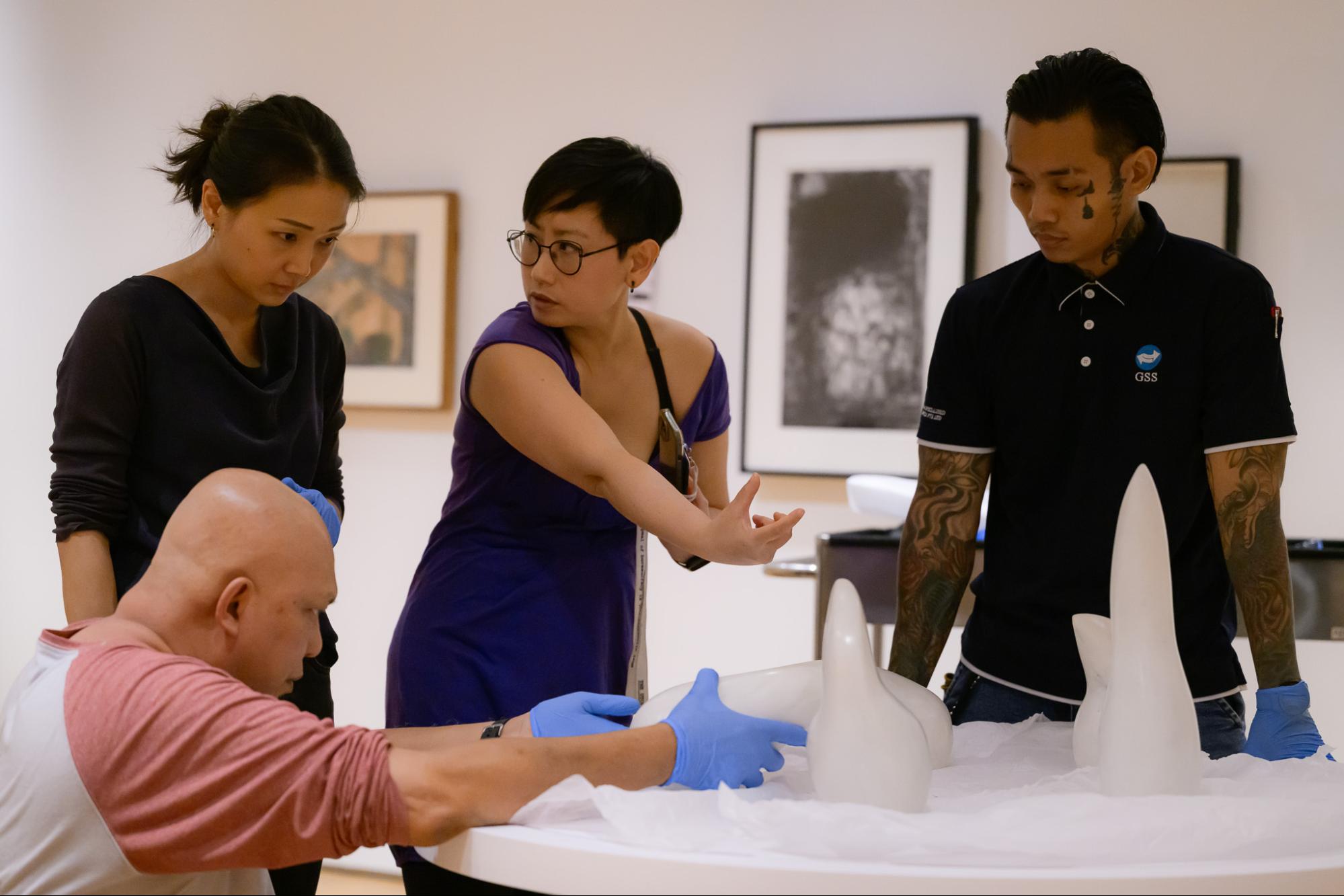
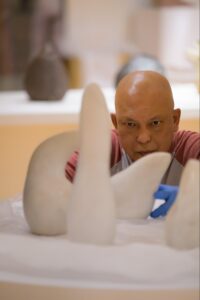
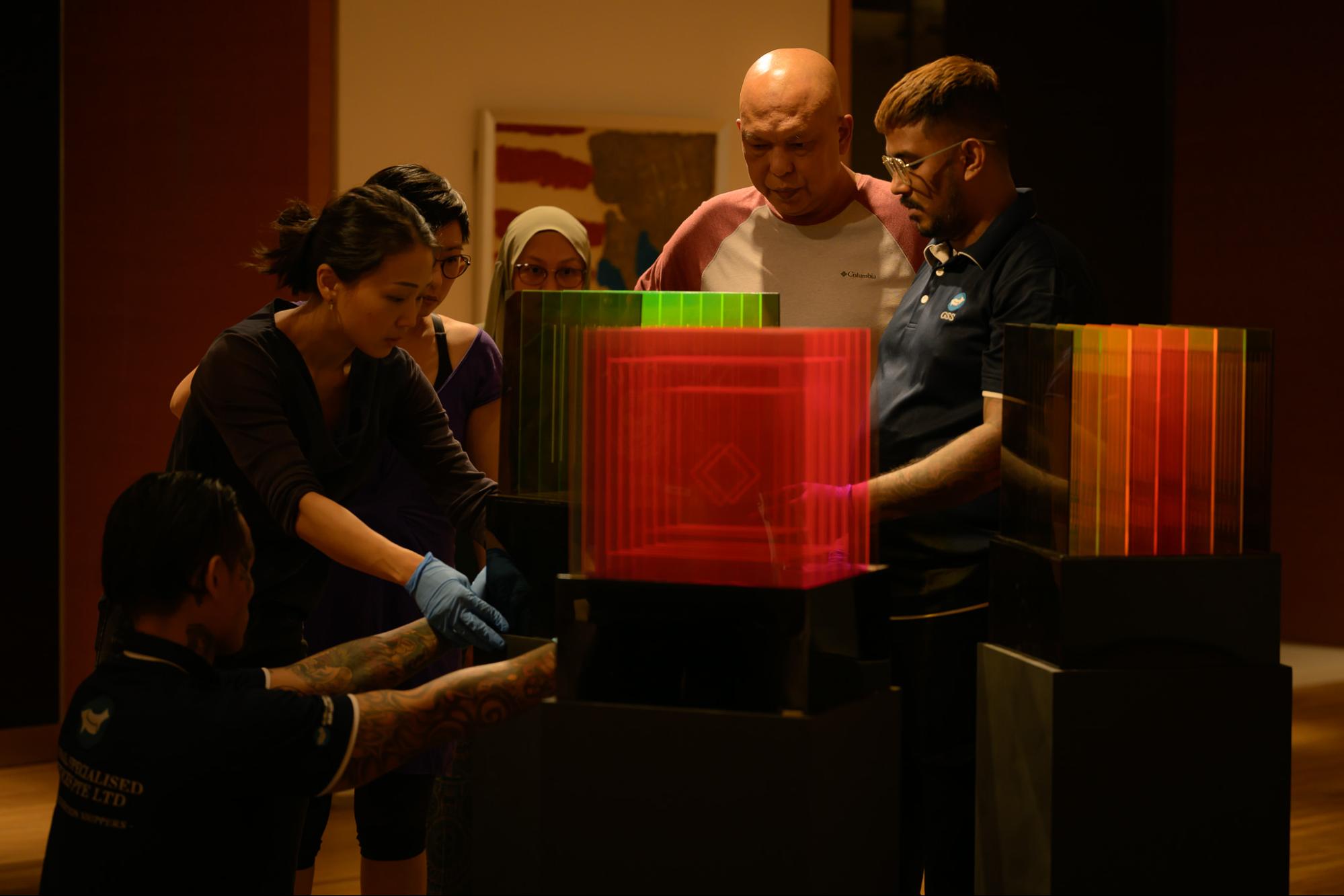
8. From left to right: Artwork installer Muhamad Wafa, curators Joleen Loh and Adele Tan, and art handler Sulaimi arrange Growth by Han Sai Por.
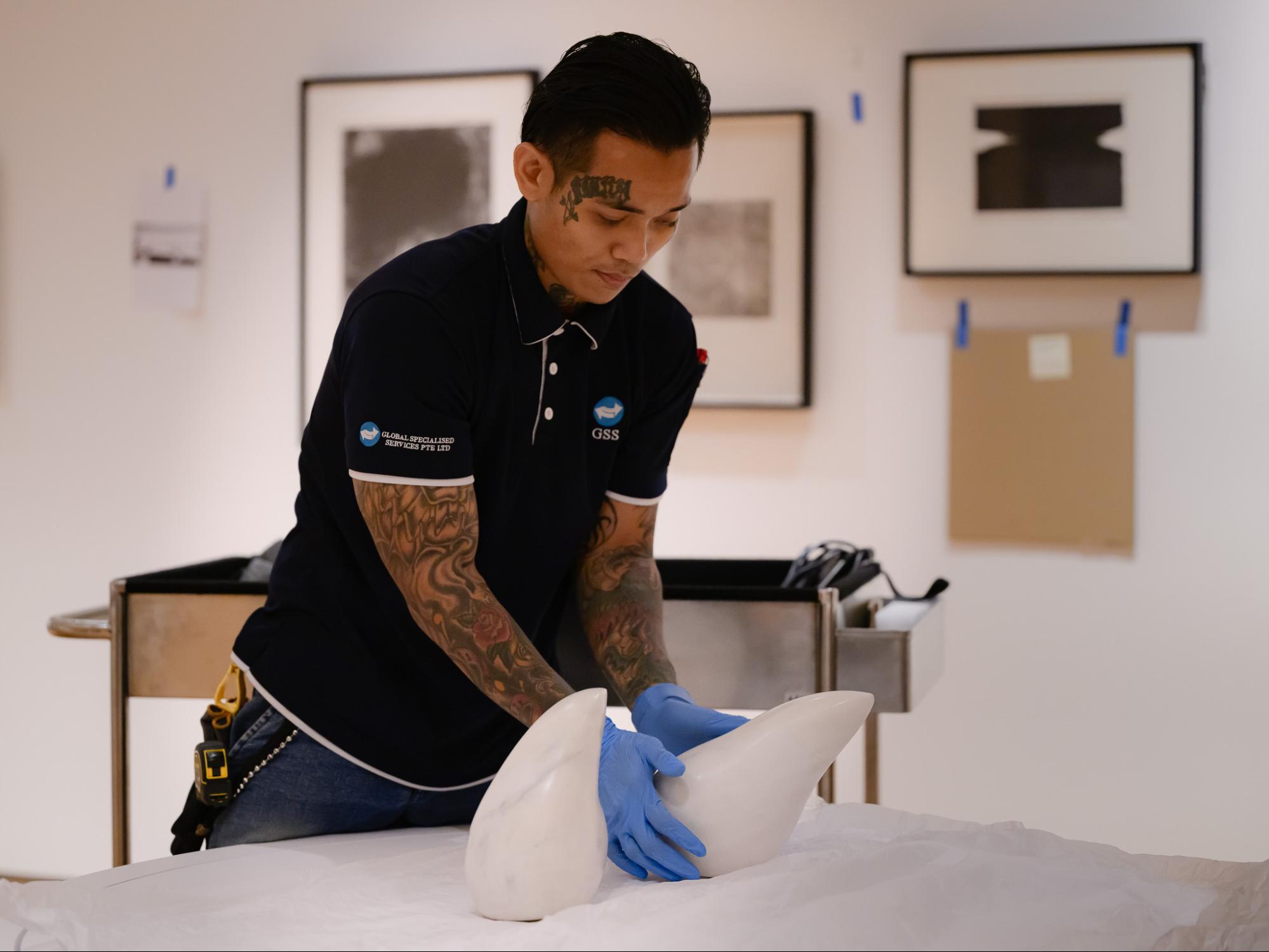
9–11. Working on Growth.

12. Tools of the trade.
13–15. An exhibition in the making.
___________________________________
Singapore Stories: Pathways and Detours in Art is on long-term display at the National Gallery Singapore. Visit nationalgallery.sg to learn more.
All featured artworks are in the collection of National Gallery Singapore unless stated otherwise.
Support our work on Patreon
Become a memberYou might also like
When the Mekong Flows Into a Michigan Museum
Seven Ways to Spend Your Singapore Art Week 2026