When Art Becomes Script: T:>Works’ 24-Hour Playwriting Competition at the National Gallery Singapore
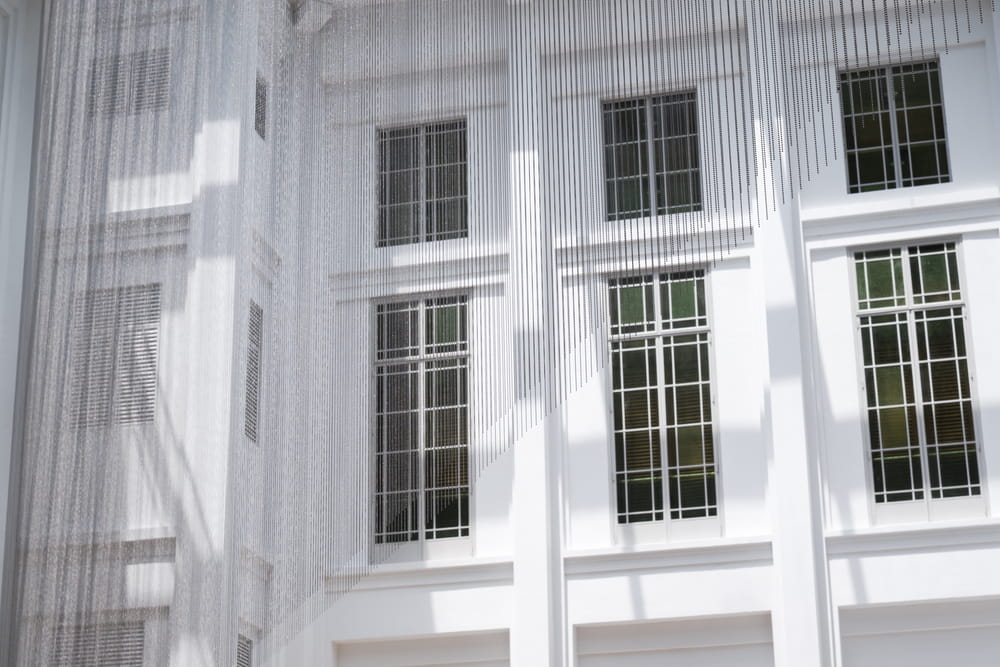

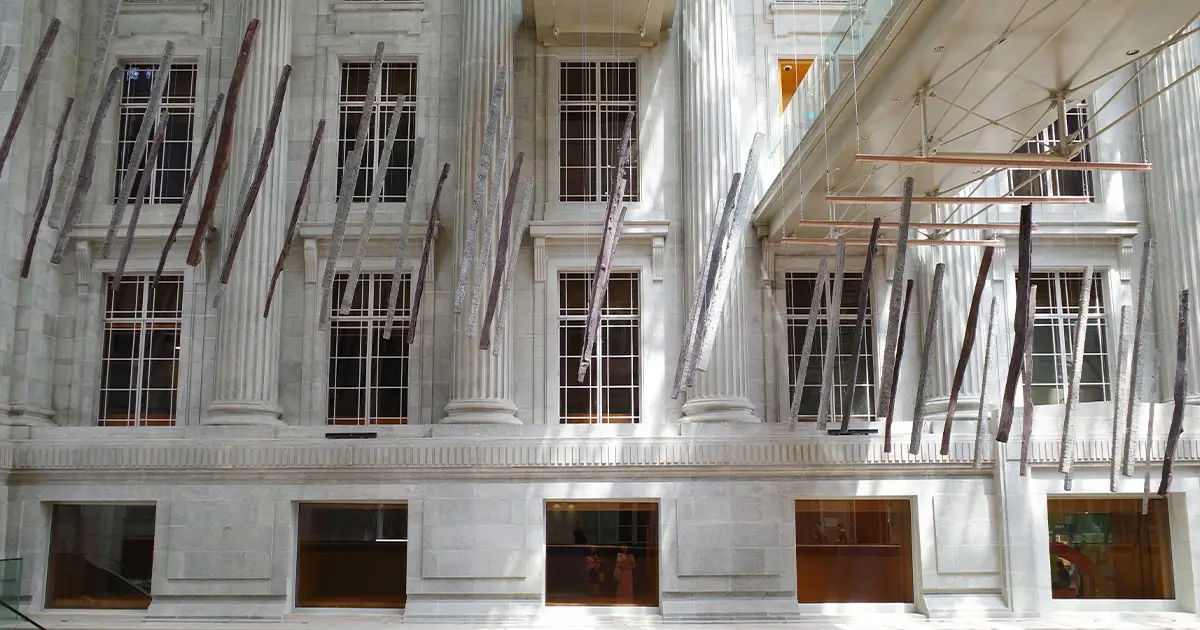
Late last year, I came across what was, to me, a new concept: T:>Works’ 24-Hour Playwriting Competition at the National Gallery Singapore. Aspiring playwrights were required to write scripts within a mere 24 hours, responding to a series of stimuli related to the exhibitions around them. In particular, the contest called them to respond to two large-scale installations commissioned under the Gallery’s OUTBOUND initiative: Angin Cloud by Art Labor, and Eidolon by Vong Phaophanit and Claire Oboussier.
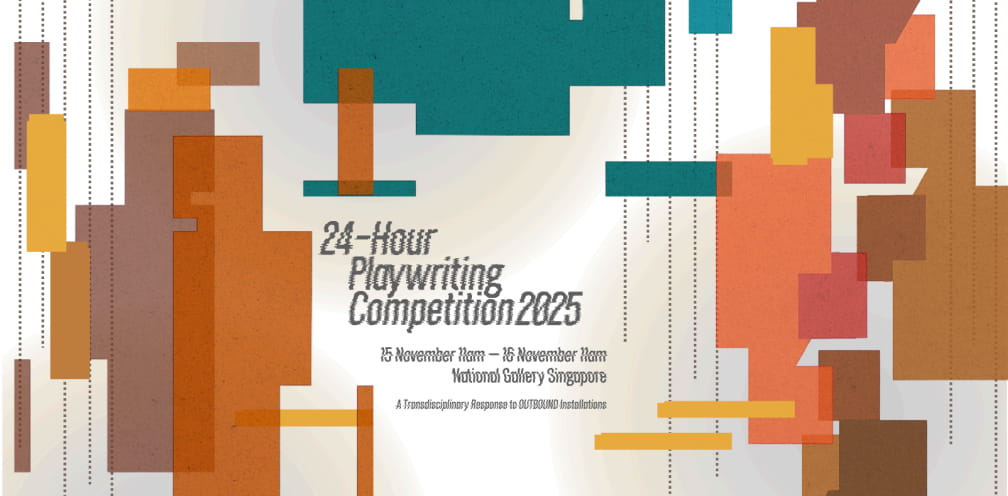
First launched in 1996, the 24-Hour Playwriting Competition has actually been a keystone of independent arts company T:>Works’ programming for decades. Open to participants of diverse ages and backgrounds, it’s served as a platform to discover emerging talent and helped nurture many a playwriting practice over the years. Co-produced with a national art institution, the 2025 edition — which took place from 15–16 November, with an invite-only dramatised reading happening this month — promised to build new connections between the performing, literary, and visual arts scenes in Singapore.
I reached out to four representatives from T:>Works and the National Gallery Singapore to find out more about this transdisciplinary event.
The prompts
Every script starts with a spark of inspiration. For the latest edition of the 24-Hour Playwriting Competition, the site-specific installations Angin Cloud and Eidolon served as the participants’ starting points.
Created in collaboration with members of the Jrai community, Angin Cloud — comprising wooden sculptures, hammocks, and suspended pillars resembling trellises used on peppercorn plantations — was a poetic response to the modernisation transforming Vietnam’s Central Highlands. For Eidolon, meanwhile, artists Vong Phaophanit and Claire Oboussier used metallic beaded link-chains to create a shimmering, ghostly curtain in the Gallery’s City Hall Courtyard, hoping to draw attention to the simple bead form’s ubiquitous presence across the world’s cultures.
As Gallery and OUTBOUND curator Goh Sze Ying expressed, the institution’s collaboration with T:>Works opens up new ways of engaging with contemporary art. “[W]hat makes this collaboration particularly compelling,” she told me, “is how it inverts the typical OUTBOUND experience. While these installations are typically encountered spontaneously as visitors move through the building, the competition occasions a rare opportunity for participants to stay with both works for an extended duration — and to see how they shift with light, time, and mood.”
“I’m curious to see, with this depth of attention, how the playwrights will translate the formal and conceptual qualities of these installations into narrative and dialogue, and what new interpretations or questions they might surface.”
In addition to the two OUTBOUND installations, competition participants were also exposed to a series of stimuli curated around the Gallery’s exhibitions. Emphasising the organisation’s mission of promoting transdisciplinary thought leadership in the arts, T:>Works Executive Director Traslin Ong noted that the stimuli were created through “close collaborations with the artists, curators, and members of different departments such as Library and Archive at the Gallery.”
Why these works?
Although the OUTBOUND installations are no doubt spectacular choices for playwriting prompts, I could not help but wonder: in an institution full of pieces by pioneering Singaporean and Southeast Asian artists, why choose these works in particular?
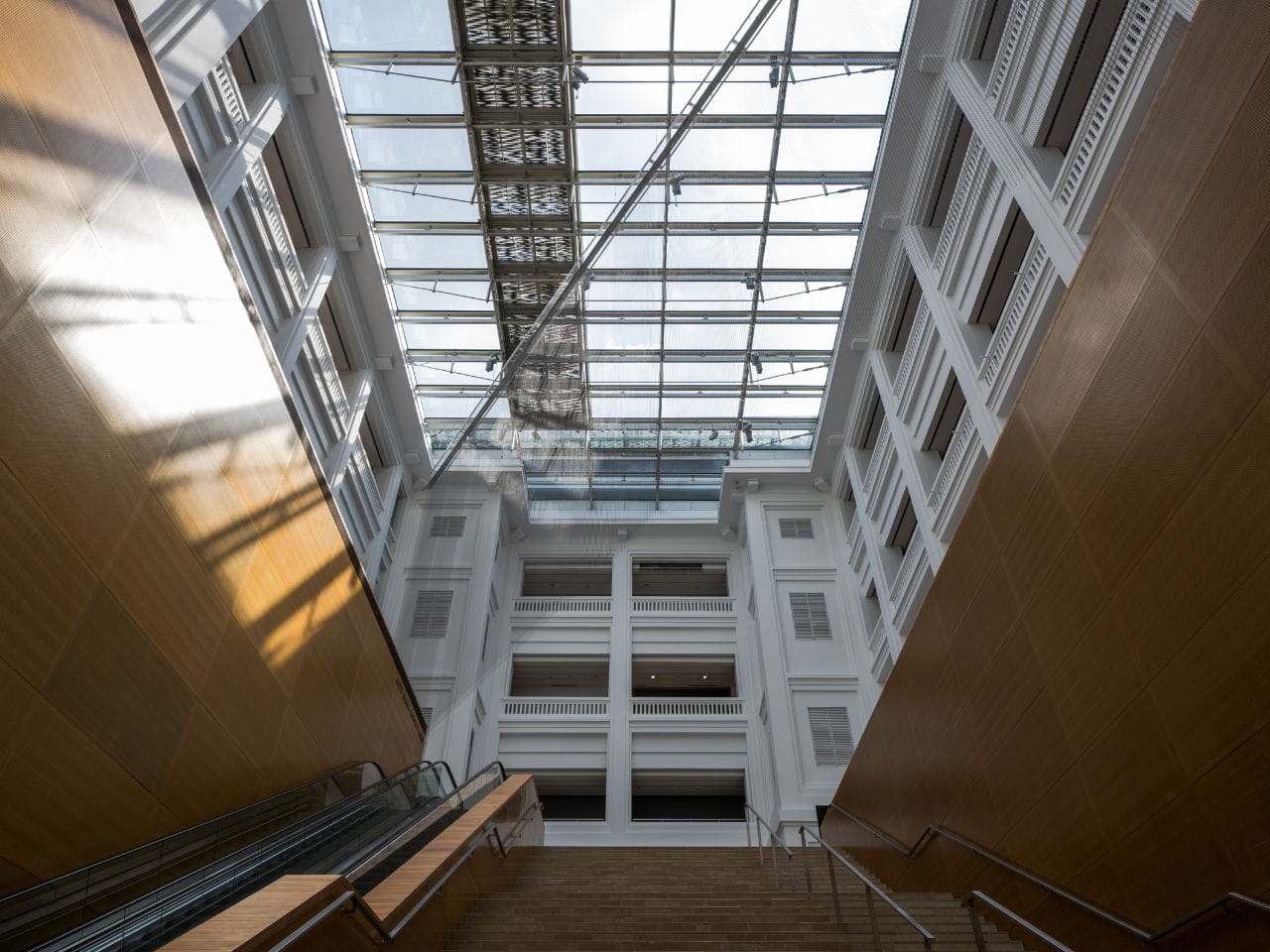
Dr. Adele Tan, Senior Curator and Assistant Director of Curatorial Programmes at the Gallery, explained, “The OUTBOUND commissions are free to view for visitors at the Gallery, as they occupy our major atriums, and so they are part of our artistic welcome to the museum. They also bring new perspectives and new forms of knowledge to us, and are thus powerful drivers for other types of creative labour like playwriting!”
Sometimes, art is perceived as unapproachable, because it seems to require extensive art-historical knowledge to appreciate or poses financial barriers to entry. So I was glad to see the issue of accessibility being acknowledged by a national institution, and have high hopes for how institutions will continue to break down walls and bring art to new communities.
Room for more collaborations
Returning to the competition’s transdisciplinary ambitions, I wondered if the framework could work the other way around. Could literary works become starting points for visual art pieces or exhibitions?
“We are definitely open to using a piece of literary art as the starting point for an exhibition,” Tan said. “Already, in the Singapore Gallery, we have focused displays on visual artists who also have vibrant practices as writers!”
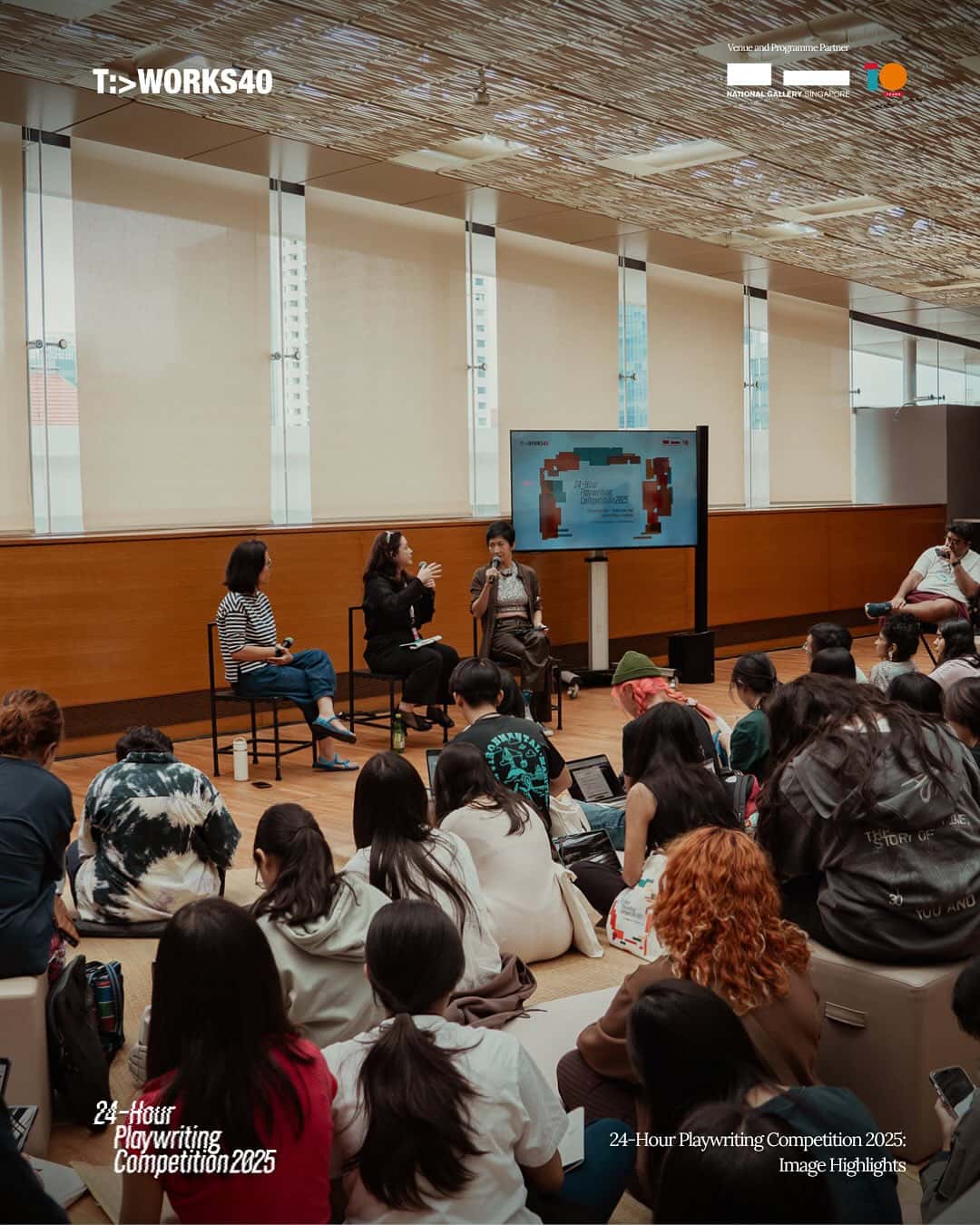
Overall, the Gallery curators were enthusiastic about facilitating other such discipline-crossing projects in the future. OUTBOUND curator Kathleen Ditzig asserted: “I believe that this is what artistic research is about. Historically, modern art was always transdisciplinary, and it would make sense to hold space for these kinds of collaborations.”
The artworks, exhibitions, and artists which form the core of the Gallery’s work, Tan said, “remain inspirations for future innovative and interpretative programming. We are always thinking about new ways to do storytelling with art!”
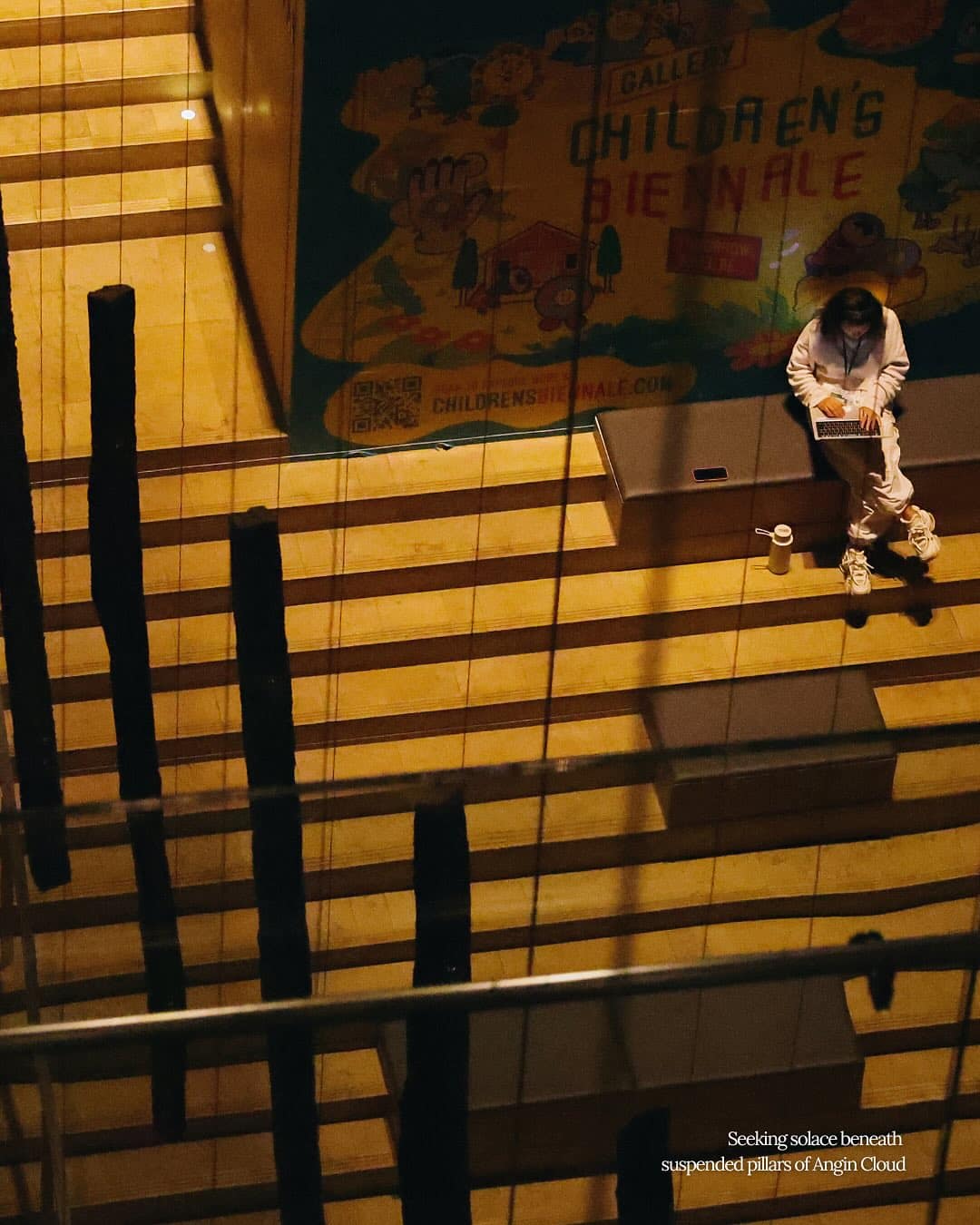
Reflecting on the competition as a whole, I felt amazed by how the participants could spend 24 hours in the Gallery and produce a script by the morning. Now, when I revisit the Gallery, I will remember the passion that drives creatives of different disciplines, and the lengths they willingly go to to refine their crafts.
___________________________________
The 24-Hour Playwriting Competition 2025 took place from 15–16 November 2025. A by-invite only Dramatised Reading of winning entries will take place on 28 February 2026 from 4–6 p.m. Visit tworksasia.org or write to connect@tworksasia.org to find out more.
OUTBOUND commissions at the National Gallery Singapore are refreshed regularly; Eidolon is on view till 1 March 2026. Visit nationalgallery.sg to find out more.
Header image: Installation view of Vong Phaophanit and Claire Oboussier’s Eidolon (2025). Image courtesy of National Gallery Singapore.
Support our work on Patreon
Become a memberYou might also like
The Indomitable Lino Brocka: Philippine Political Art Finds a Home in Museums Abroad
Fair Play? Rethinking Pop Culture Conventions and Their Place in the Art Landscape