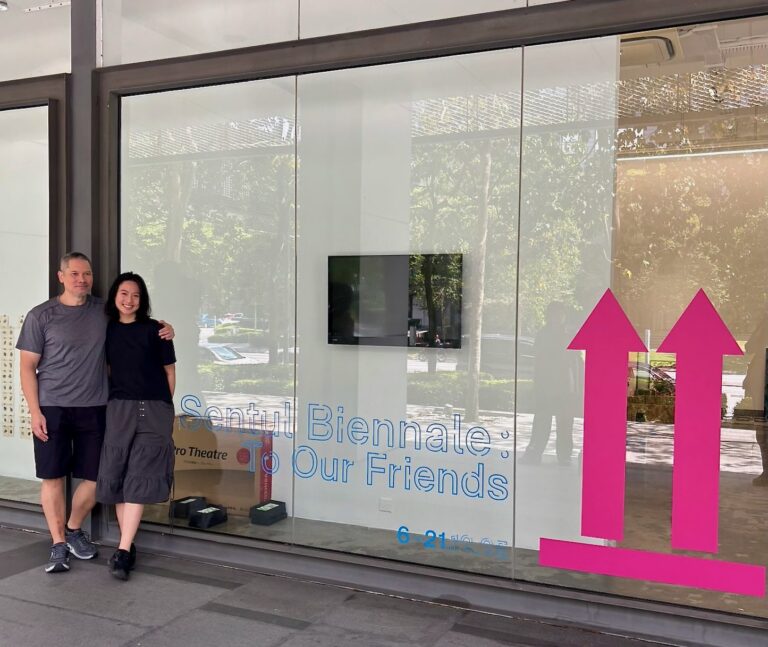
It is a sweaty day in Bangkok, like all days in Bangkok, but I’m excited to be in a foreign place and full of beans at the prospect of visiting Dib Bangkok, one of the latest contemporary art spaces to open in the city.
This time, I’m visiting as part of a press trip organised by the CHANEL Culture Fund for the purposes of profiling its newest partnership – the CHANEL Gateway Commission at Dib Bangkok, an annual commission designed to empower local artists to realise ambitious work that “generates vital artistic exchange and dialogue.”
There is something heady about being part of the Chanel group. The staff on the trip with us are stylish, with the odd flash of tweed or embellished pair of shoes juxtaposed quirkily against the grey concrete of the city. I feel cocooned in luxury, if somewhat underdressed. Gliding through the city in comfortable pre-arranged transport, I can see how easily one could get used to this. It is also a useful reminder of how the experience of art, and perhaps even one’s impressions of it, can be shaped by the conditions under which it is encountered.
On this trip in particular, the Singapore contingent is running from the Indonesian forest fires in our City in a Garden, and it is a pleasant surprise that the air in Bangkok is fresher and clearer than what we’ve escaped from back home.
Dib – an oasis in the city
Dib as a building is also mightily impressive, with its now-iconic cylindrical column housing James Turrell’s permanent two-level installation Straight Up and its reflecting pool. It is made up of grey, clean lines broken up only with the shiny orbs of Pars pro Toto (2020) by Polish-German artist Alicja Kwade, and offers a shaded respite from the hustle and bustle of the city around us.
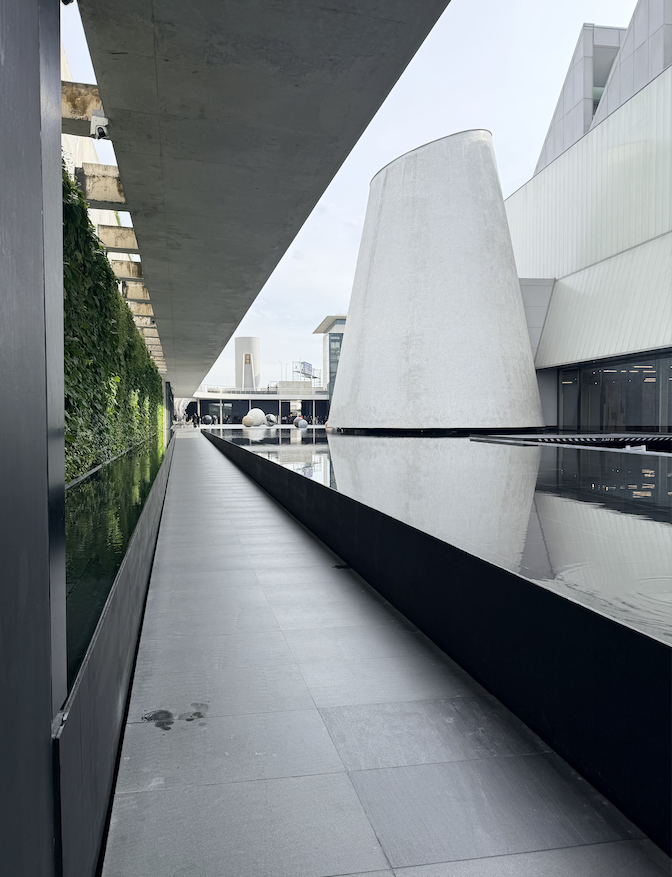
A couple of things hit you immediately when you enter the museum. First, the expansiveness of the space is what immediately registers. At Dib, the negative space is massive. The main courtyard is huge, and its grey walls strike a sombre note against the blue late afternoon sky.
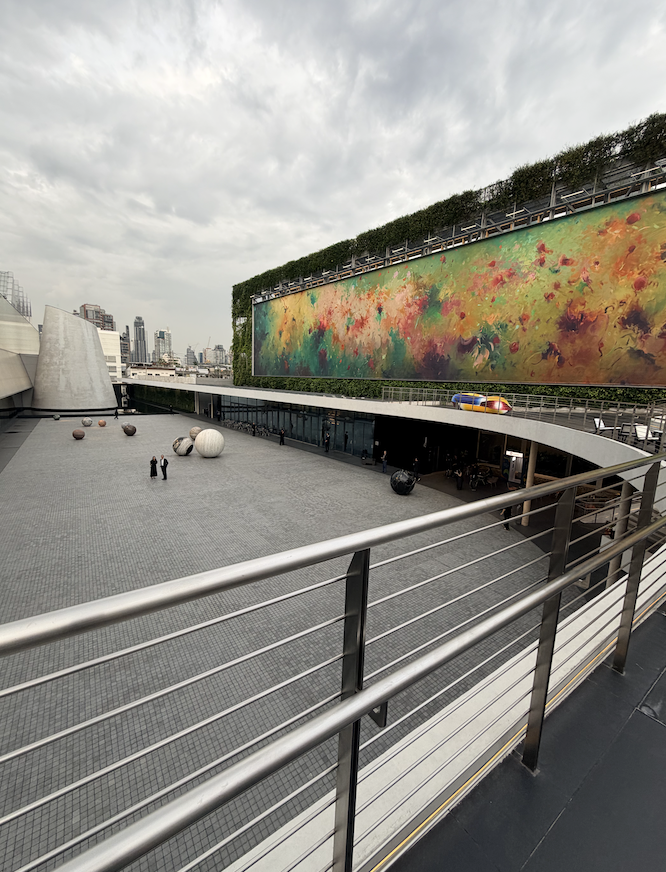
It is also an elegiac space, but I wonder if I feel this way only because I know about the slightly tragic story behind it. The museum is the brainchild of Petch Osathanugrah, the pharmaceutical tycoon who never lived to see the completed structure despite working on it for many years. His son, Purat “Chang” Osathanugrah, now Founding Chairman of Dib, has spoken publicly of the sad irony of the museum’s opening – a behemoth of a space in busy Bangkok, planned and fussed over by his father who didn’t live to see his masterpiece come to life.
The video game as a site for exhibition-making
It is here at Dib that we are introduced to the work of Nawin Nuthong, winner of the inaugural CHANEL Gateway Commission. Nawin’s work is flanked by the museum’s own new exhibition Giving Life which shows off Alexander Calder works in conversation with pieces by Thai and international artists.
Japanese artist Kei Imazu’s Satene’s Gate offers a “farm” of fantastical plastic cut-out plants and human organs based on an Indonesian folk tale:
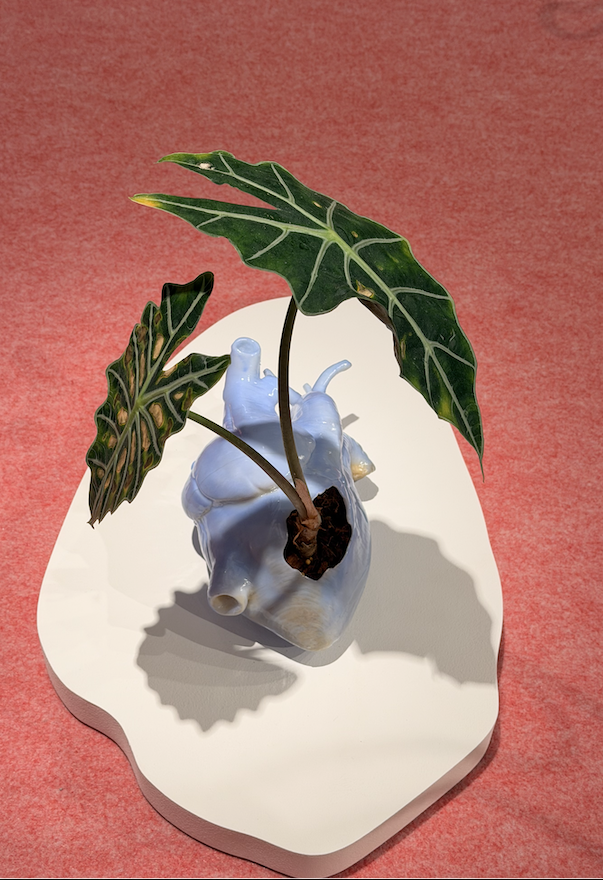
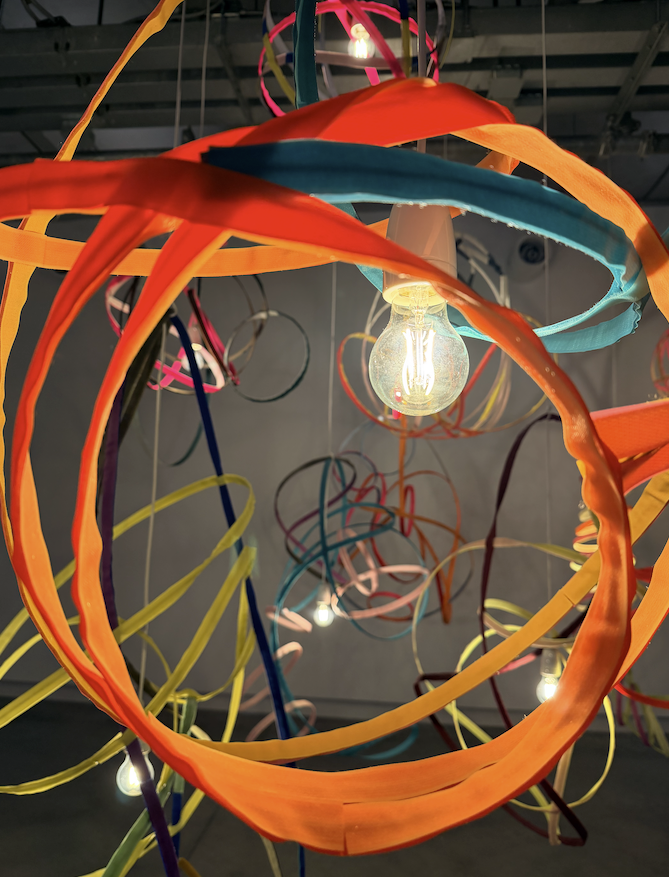
Together with Tobias Rehberger’s spiralling wormhole of hanging mobiles, it paves the way into Nawin’s Project 147, which combines sculpture and screen-based imagery with a video game environment across six player consoles.
While it draws on the ancient Thai folk story Khun Chang Khun Phaen, Project 147 brings Thai mythology into a form familiar to anyone who has spent time navigating the world of video games. Nawin explains that the video game format allows him to better explore the “making of exhibitions,” describing his art practice as being more closely aligned with the latter than the mere “making of objects.”
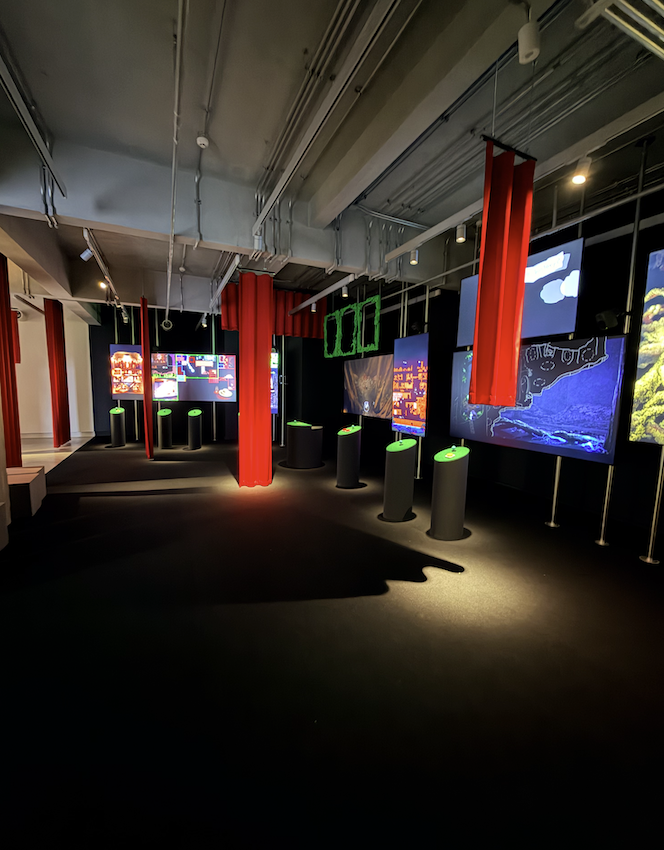
In his virtual world, Nawin “plays with pixels” to create two- and three-dimensional forms. Those of us who grew up in the 1980s and 90s will likely find Project 147’s kitschy, cartoony elements endearing, although the current pervasiveness of generative AI use in society may well give us pause. Was it really so long ago that we could tell so easily what a computer had made?
The Chanel Gateway Commission is an ambitious project. When I ask Yana Peel, President Arts, Culture & Heritage at CHANEL, why Bangkok was chosen and not, say, Singapore, she reminds me that CHANEL has supported art in Thailand for six years now, although this was previously centred around performance festivals and more ephemeral projects. CHANEL subsequently clarifies that it did not choose Bangkok over another city. Rather, it developed the Gateway Commission specifically for Bangkok and its needs. Peel also emphasises the unique qualities of Dib:
“This incredible museum (Dib) is a natural partner for us,” Peel explains, “Chang’s vision and ability to really manifest an extraordinary new museum that bridges generations, has been for us, the perfect partner.”
Revisiting the Bangkok Kunsthalle
We make many stops on this trip which introduces Bangkok’s general aesthetic and approach to art and design, but there are a few stops which stand out. The Bangkok Kunsthalle is one.
It is a grim, burnt-out shell of a space which swallows us whole as we wander through its labyrinthine corridors. On my last visit in 2024, there was a single major work, Korakrit Arunanondchai’s nostalgia for unity. Two years later, the space is filled with works in all manner of mediums. The corridors twist and turn in inky gloom while Founding Director Stefano Rabolli Pansera – smartly dressed in a full suit and tie in spite of the blistering heat outside – tells us rather dramatically, “I am an architect myself but I reject architecture.”
“Here, we delegate the architecture to the artists.”
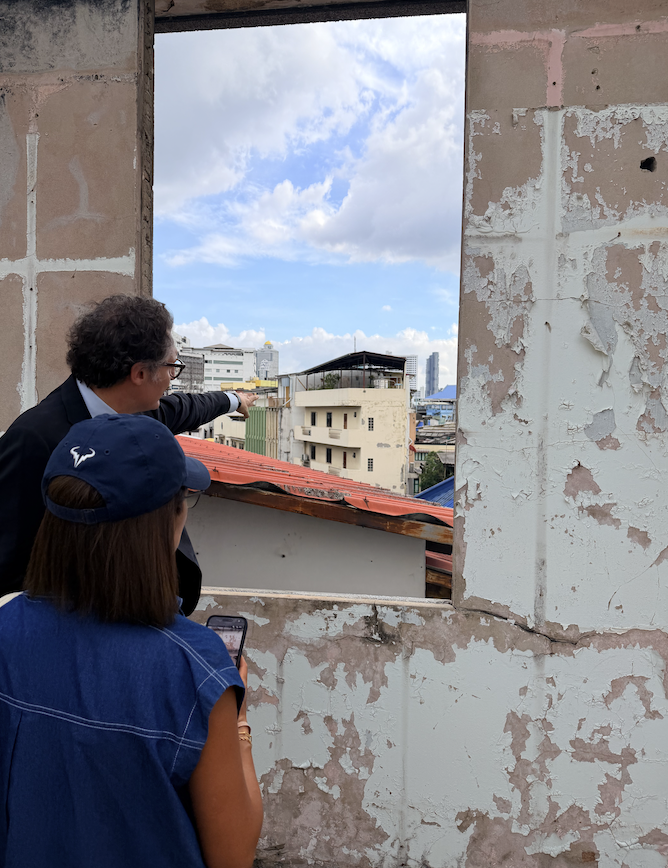
Pansera informs us that the architecture of the Kunsthalle is as much a key player in the exhibitions the space hosts as the artists themselves.
“Artists just come in and select whatever space they want to work through,” he tells us, explaining that they can choose how their works interact with the interplay of shadow and light, as well as the beams and structural quirks of the building.
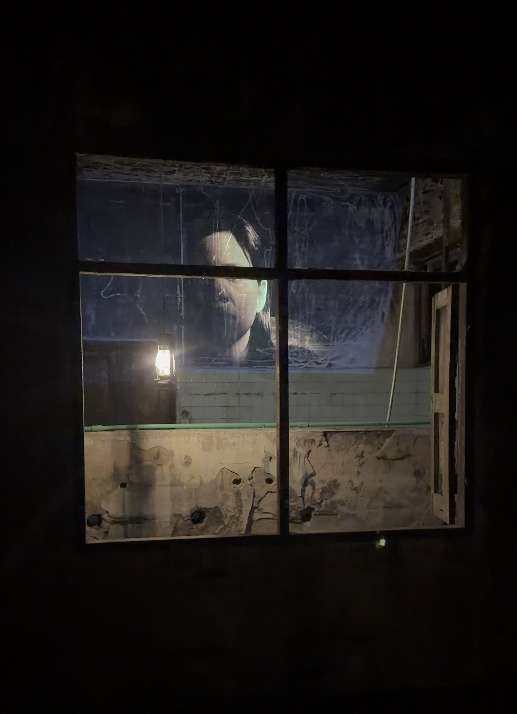
The result is something quite spectacular, with works like Daniel Hui’s Funeral Rites projecting ghostly images at certain intervals, emphasising the transience and gloom of the room.
Bangkok’s special sauce?
Over the many conversations on bus rides and at meals with Bangkok art insiders and fellow journalists, we discuss how Bangkok’s contemporary art scene has evolved over the years, and it is a common observation that private patronage is a vital vein keeping the lifeblood of the scene pumping. One insider who accompanies us on our tours ruefully notes that Thailand doesn’t have the same kind of structural support that, say, Singapore has, and so private patronage is an essential element that makes or breaks the scene. At the same time, observers point out that the Thai art scene is not “spoiled” by the art market. It is, of course, a double-edged sword because Thai artists do not then have a good chance of exhibiting internationally unless they are ‘sellable.’
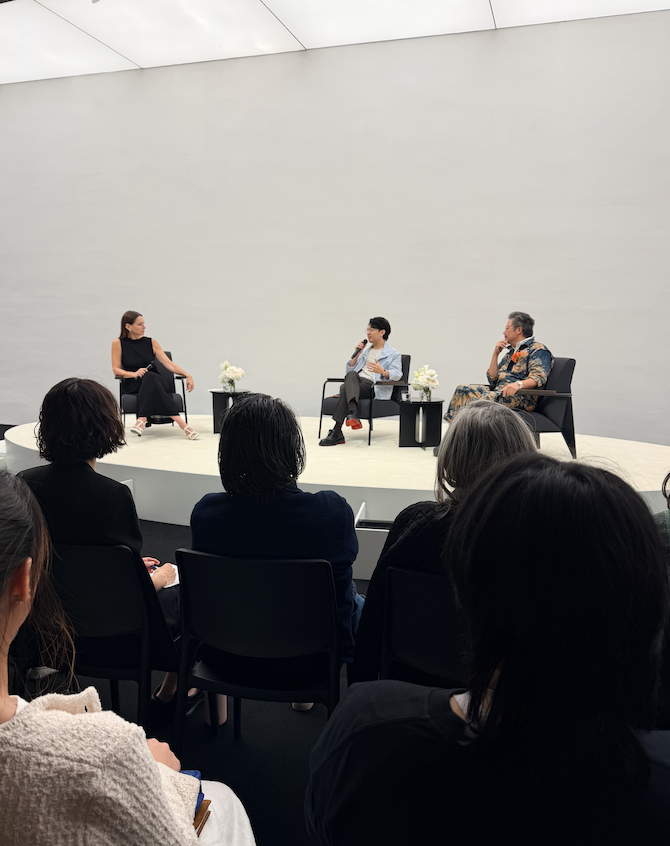
It’s a sentiment that Chang Osathanugrah echoes in a panel discussion with Thai architect Kulapat Yantrasast, moderated by Peel, that we later attend :
“We are not very top down,” he says, “we don’t have the policies to support us, so what you see is like those beautiful crazy flowers that pop out of the sidewalk.”
“We don’t get tax benefits or anything like that here, like you do in Korea or in Singapore. It’s this unplanned cultural renaissance that’s happening in Bangkok. We look at Hong Kong, or even Singapore with minimal sales taxes, where there is (an art) market; and in a way, the art in Thailand is so pure because we don’t have that.”
It is a contradiction in terms in many ways: a “purity” of purpose underpinned by the lack of a market, (or at least the perception of it), and a scene that is then bookended by limited incomes for artists and international recognition for only a select few. But perhaps the proof is also in the pudding – the Bangkok Art Biennale, set to launch its fifth edition this year, reported 1.2 million visitors to its 2024 edition, which featured 303 works by 76 artists and collectives across 11 venues. It estimates a cumulative attendance of 5 million since inception, and the Bangkok Art and Culture Centre reportedly sees around 1.8 million visitors annually. (As a point of comparison, the 2024 Venice Biennale saw an approximate count of 700,000 visitors, and the last edition of documenta in 2022 hosted 738,000 visitors). The avid consumption of quality art in Bangkok is evident, but there is perhaps a danger in romanticising freedom from market forces, particularly when the absence of a developed market can also mean an absence of sustainable livelihoods for artists.
Patronage as both a journey and a destination
As with all good press trips, three quarters of the fun is in gossiping with other journalists and the conversations turn quickly to how art publishing (and indeed publishing in general) is under commercial pressure now more so than ever before, to churn out content that attracts eyeballs and TikTok fans as much as it pleases advertisers. I think about myself, juggling my own corporate work with my duties as a Plural Art Mag writer. Like all good creatives, juggling several jobs to fund both life and creative passion is simply par for the course – which is why patronage that understands this tension and seeks to alleviate it is so important.
CHANEL’s Culture Fund is currently working on 50 projects across 15 countries and I am pleasantly surprised that Peel, in our brief interview, chooses to profile its work in media through its CHANEL Connects podcast and Arts & Culture magazine which is distributed around the world. Peel is clear that the work of the commercial brand is quite separate from its art and cultural mission — she informs me politely but firmly, that she thinks only of the profits of museums and how to address the gaps in sustainability faced by art institutions and artists. That being said, she is also not averse to meeting audiences where they are in creating accessibility.
I press on, asking if CHANEL’s branding with familiar luxury products is something that helps people to overcome an initial resistance to art projects which might otherwise be perceived as inaccessible:
Says Peel:
“Anything that helps people overcome resistance to art for me can only be a positive, and so it’s very flattering to think that these programs that we’ve established now on five continents are driving more people to experience art and culture.”
Peel also harks back to CHANEL’s century of tradition of giving to artists like Jean Cocteau, Salvador Dalí and Pablo Picasso. “For me,” she explains, “the mission has always been to think about how we can enrich the lives of artists and of cultural institutions. My mission is solely philanthropic in that sense, in terms of really thinking how we can partner with the greatest cultural leaders to help them go further than they can go themselves”
It is a timely reminder that while all types of private patronage no doubt come with their own set of conditions, variety in the support that artists receive is key. So too is the understanding that support should help them to “go further”, rather than tie them to a surfeit of bureaucratic performance indicators. (Of course, the specific question of what “further” looks like is another complex question to be unpacked as even the most generous patronage involves an exercise of discretion over which artists, practices and ambitions are considered worthy of support.)
As Peel reminds me in our short interview, with names of Southeast Asian artists tripping off her tongue (Heman Chong, Ho Tzu Nyen, Korakrit Arunanondchai and Apichatpong, just to name a few),“(CHANEL) is just getting started,” in Southeast Asia.
When the trip draws to a close I find myself ruminating on the question Peel asks in the panel discussion we attended earlier– “What is in the air in Bangkok?”
I wonder if this is more than a metaphor.
After the heavy, smoke-choked air we left behind in Singapore, Bangkok’s surprisingly clearer atmosphere felt like something much lighter, less controlled, and unexpectedly open.
___________________________
The author travelled to Bangkok on a press trip sponsored by CHANEL.
Giving Life runs at Dib Bangkok till 3 May 2027
If you’re in Bangkok towards the end of 2026, look out also for the opening of the Bangkok Art Biennale.
Support our work on Patreon
Become a memberYou might also like
Beyond the Cinema Screen: 4 Art Highlights to Discover at SGIFF’s Undercurrent
National Gallery Singapore’s First R18-Rated Exhibition Is Less About Sex Than You Think
Sentul Biennale and the Politics of Friendship in Contemporary Art